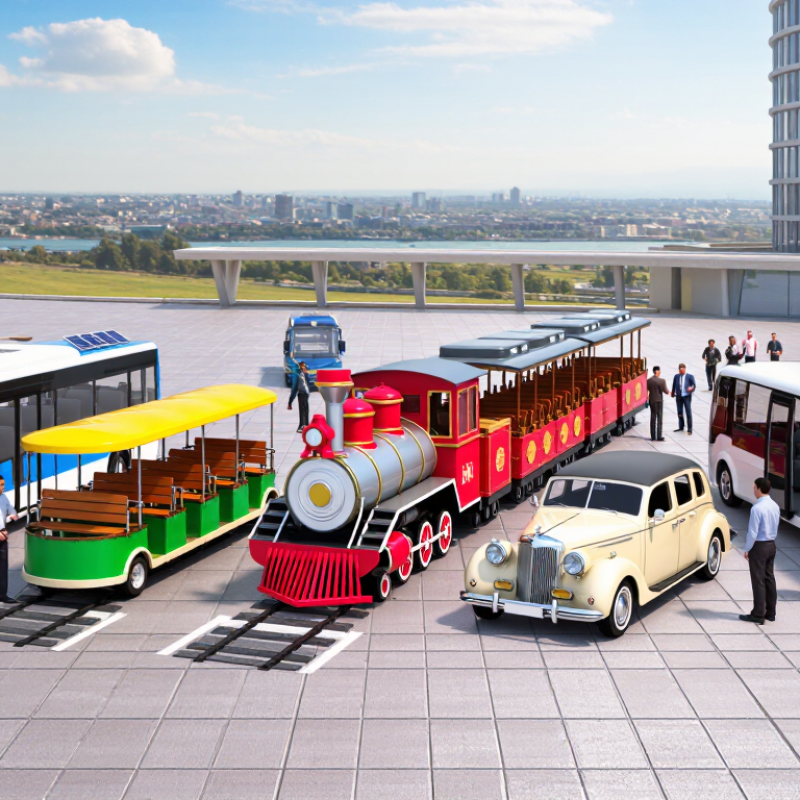
| Open electric shuttle | Usually 8–23 passengers; suitable for resorts, campuses, parks, airports, and pedestrian-oriented districts. Typical operating speeds are low and route lengths are often short. | Road-legal use may require vehicle type approval, lighting, mirrors, seat belts, braking equipment, and local registration. Low-speed vehicle rules differ substantially between jurisdictions. | Weather curtains, wheelchair ramp or lift, accessible seating, route display, rear-facing seats, luggage racks, doors, and lithium or lead-acid battery options. | Confirm passenger mass, certified range under full load, charging time, battery replacement cost, gradient capability, corrosion protection, and after-sales parts support. |
| Enclosed electric sightseeing bus | Approximately 14–30 passengers; appropriate for urban tours and attractions requiring protection from rain, heat, cold, or dust. | Enclosed passenger vehicles generally face stricter requirements for occupant protection, emergency exits, glazing, defrosting, ventilation, lighting, and accessibility. Public-road operation may require bus or minibus approval. | Panoramic windows, climate control, audio commentary, multilingual displays, USB charging, low-floor entry, luggage space, and removable or fixed seating. | Evaluate thermal management, HVAC energy consumption, visibility, emergency evacuation layout, battery warranty, charging infrastructure, and total permitted weight. |
| Electric tourist tram | Commonly 20–60 passengers across several connected sections; designed for fixed sightseeing routes, waterfronts, historic centers, and large attractions. | The towing arrangement, articulation, overall length, turning radius, braking performance, and passenger circulation can trigger additional approval requirements. Route permits and local operating licenses are often necessary. | Open or enclosed carriages, themed exterior panels, audio systems, panoramic roofs, accessible platform, removable windows, and different trailer configurations. | Check maximum route gradient, swept path, curb clearance, charging turnaround, coupling safety, axle loads, depot space, and whether the full train can be serviced locally. |
| Low-speed neighborhood electric vehicle | Usually 2–8 passengers; suited to private tourism facilities, hotel transfers, gated communities, golf-oriented sites, and short-distance mobility services. | Many jurisdictions distinguish private-site vehicles from road-registered vehicles. Use on public roads may require speed classification, registration, insurance, safety equipment, and an approved driving license. | Cargo box, rear seat, medical or service configuration, foldable windshield, roof, doors, safety belts, beacon, telematics, and accessibility adaptations. | Clarify where the vehicle may legally operate, compare turning radius and ground clearance, and verify payload after adding seats, batteries, doors, and accessories. |
| Hybrid or combustion sightseeing bus | Often 20–70 passengers; useful for long routes, steep terrain, high daily utilization, or locations with limited charging access. | Buyers must consider local emissions standards, noise limits, fuel-system requirements, periodic inspections, driver licensing, passenger-transport permits, and restrictions in low-emission or historic zones. | Hybrid energy management, particulate filtration, climate control, panoramic glazing, tour-guide console, wheelchair equipment, and low-noise operating modes. | Compare fuel or energy cost per route, maintenance intervals, emissions compliance, drivetrain service availability, noise performance, and access restrictions along the planned route. |
| Open-top sightseeing bus | Commonly 30–80 passengers; designed for city tours, scenic routes, and high-volume visitor destinations in suitable weather conditions. | Passenger seats, handrails, guard protection, emergency exits, roof height, upper-deck access, rollover protection, and weather exposure may be regulated more strictly than on ordinary buses. | Retractable roof, removable side panels, multilingual commentary, seat belts where required, anti-slip flooring, accessible lower deck, and destination signage. | Assess seasonal utilization, wind and rain protection, upper-deck accessibility, bridge and tree clearance, route height limits, cleaning requirements, and passenger-flow management. |
| Solar-assisted electric shuttle | Generally 8–20 passengers; appropriate for sunny, low-speed sites such as resorts, ecological parks, exhibition areas, and large campuses. | Solar panels normally supplement rather than replace grid charging. The complete vehicle still needs to meet applicable electrical, structural, fire, road-use, and accessibility requirements. | Roof-integrated photovoltaic modules, energy monitoring, shade canopy, regenerative braking, smart charging, low-energy lighting, and removable passenger modules. | Request measured solar yield for the target climate, verify roof-load effects, check battery thermal protection, and calculate charging needs during cloudy or high-demand periods. |
| Accessible sightseeing vehicle | Capacity varies by platform; designed to carry wheelchair users, people with limited mobility, families, and mixed passenger groups. | Accessibility rules may specify ramp or lift performance, wheelchair restraint points, aisle width, priority seating, handrails, boarding space, and stop or terminal access. | Kneeling suspension, ramps or lifts, restraint systems, contrasting edge markings, audio and visual announcements, priority seats, and adjustable boarding arrangements. | Measure real boarding geometry, not only brochure capacity. Verify lift reliability, ramp gradient, restraint certification, turning space, cleaning access, and operator training requirements. |