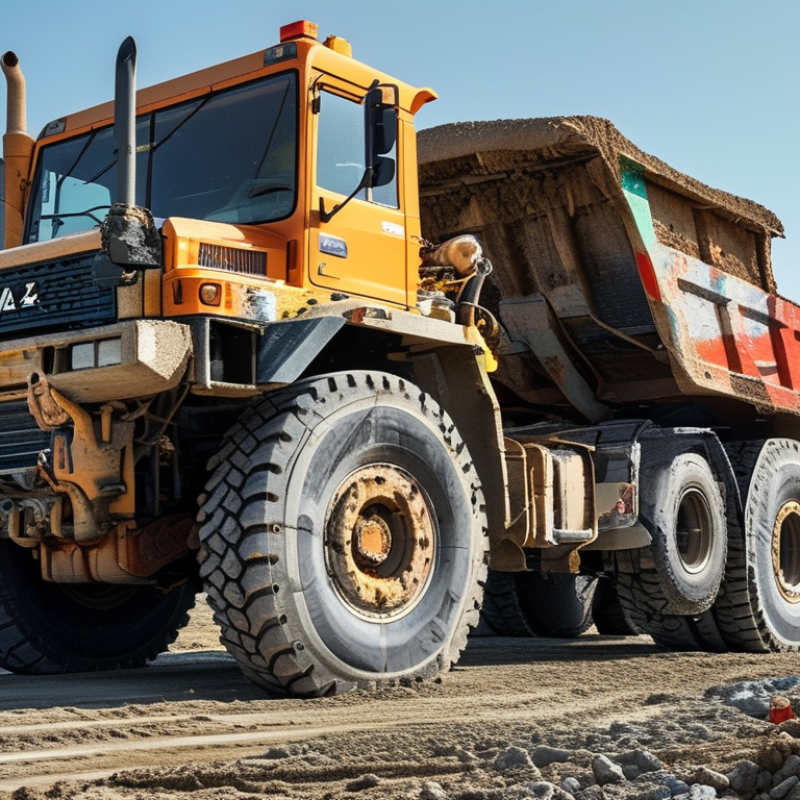
| Basic definition | A 4x2 dump truck has four road wheels arranged on two axles, with power delivered to one axle. | It is a two-wheel-drive rigid truck designed primarily for paved roads, construction access roads, and prepared job sites. |
| Driven axle | The rear axle is commonly powered, while the front axle provides steering. | The layout is mechanically simpler and generally lighter than a two-drive-axle configuration. |
| Typical gross vehicle weight rating | Approximately 10,000–26,000 kg, depending on axle ratings, chassis design, and local regulations. | The truck, payload, fuel, fluids, tools, and occupants must remain within the legal and manufacturer-rated limit. |
| Typical payload range | Approximately 4–14 metric tonnes for many medium-duty and heavier rigid 4x2 configurations. | Actual payload is controlled by the rated capacity of the chassis, axles, tires, suspension, and dump body. |
| Engine output | Common working ranges are about 100–300 kW, or approximately 135–400 horsepower. | Higher output improves hill-climbing and acceleration but may increase fuel use, purchase cost, and maintenance demands. |
| Transmission | Manual, automated manual, and fully automatic transmissions are used, depending on the vehicle specification. | Low gears provide pulling power when starting, climbing, or maneuvering with a loaded body. |
| Dump body capacity | Common body volumes are approximately 5–18 m³, with smaller bodies often used on lighter chassis. | The body should be matched to the material density so that volume does not cause the truck to exceed its weight rating. |
| Dumping mechanism | A hydraulic pump sends pressurized fluid to one or more cylinders, which raise the front of the body for rear discharge. | The body must be fully lowered and secured before road travel. |
| Common materials carried | Sand, gravel, soil, crushed stone, asphalt, demolition debris, mulch, and other non-liquid bulk materials. | Material type affects payload weight, body wear, loading method, and unloading safety. |
| Typical operating surfaces | Paved highways, compacted gravel roads, asphalt plants, construction sites, quarries, and prepared industrial yards. | Traction and stability are best on firm, level, and well-maintained surfaces. |
| Typical maximum road speed | Many road-going units are designed for approximately 80–105 km/h, subject to local speed limits and load conditions. | The legal speed limit, tire rating, weather, road condition, and payload always take priority over the vehicle’s capability. |
| Turning and maneuverability | A 4x2 generally has a shorter and simpler layout than many multi-axle trucks, with turning circles commonly around 14–20 m depending on wheelbase. | It can maneuver efficiently in urban streets and confined construction areas, although visibility around the body remains limited. |
| Main operating cycle | Load the body, secure the tailgate, travel to the destination, position on stable ground, raise the body, discharge, lower the body, and inspect before moving. | Correct sequencing reduces rollover risk, hydraulic damage, and accidental material loss. |
| Key benefits | Lower tare weight, simpler drivetrain, potentially lower operating cost, good road efficiency, and straightforward maintenance. | It is often economical for regular hauling routes where extreme off-road traction is not required. |
| Traction limitation | Only one axle supplies engine torque, so traction can be reduced on mud, loose sand, snow, ice, or steep unpaved grades. | A 4x4 or multi-axle drive configuration may be more suitable for consistently difficult terrain. |
| Dumping limits | The body should be raised only on firm, level ground with adequate overhead clearance and no people or obstacles nearby. | Side slopes, soft shoulders, uneven ground, overhead cables, and stuck loads significantly increase rollover or collision risk. |
| Material compatibility | The body is intended for bulk solids and is generally unsuitable for liquids unless specially designed and approved. | Liquid transport requires a properly designed tank, baffling, safety systems, and applicable regulatory approval. |
| Daily inspection priorities | Check tires, wheel fasteners, brakes, steering, lights, mirrors, hydraulic hoses, cylinder mounts, tailgate, body locks, and fluid levels. | Inspection helps identify defects before they cause loss of control, hydraulic failure, or an unsafe dump cycle. |
| Best-fit applications | Municipal material delivery, road maintenance, landscaping, aggregate hauling, asphalt work, excavation support, and general construction. | The configuration is most effective when road travel, moderate payloads, and frequent loading and unloading are central to the job. |