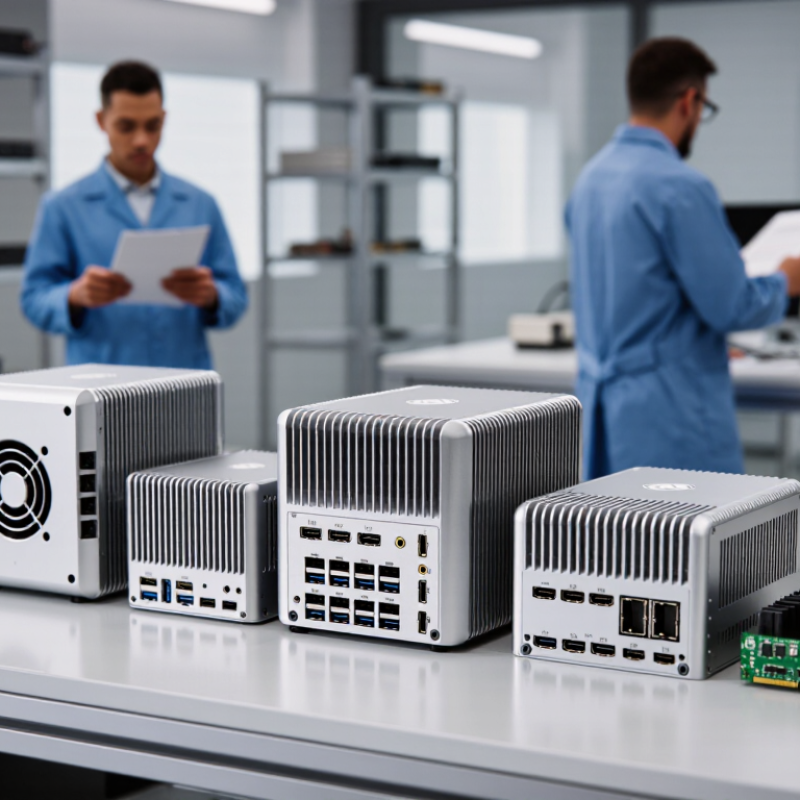
| Definition | A compact computer designed for dedicated, continuous operation inside industrial, commercial, transportation, or automation equipment. | The system is selected for a specific embedded application rather than general desktop use. | Application purpose, installation location, duty cycle, required operating life, and software platform. |
| Processor Architecture | Common options include x86 processors for broad software compatibility and ARM-based processors for lower power consumption in selected designs. | Architecture affects operating-system compatibility, application support, performance, power use, and long-term availability. | Processor lifecycle, performance benchmarks, operating-system support, BIOS or firmware availability, and replacement planning. |
| Memory and Storage | Typical configurations use soldered or socketed memory and solid-state storage such as SATA SSDs, M.2 modules, or eMMC, depending on platform design. | Memory capacity and storage endurance influence application responsiveness, reliability, and maintenance intervals. | Maximum memory, storage interface, write-endurance rating, data-retention requirements, secure-erase options, and replacement procedure. |
| Industrial Interfaces | Frequently available interfaces include Ethernet, USB, serial ports, digital I/O, CAN, HDMI or DisplayPort, and expansion slots. | The correct interface combination reduces the need for external converters and simplifies system integration. | Port quantity, connector type, isolation, voltage levels, communication protocols, pinout documentation, and expansion-card compatibility. |
| Operating Temperature | Commercial designs are commonly specified around 0 °C to 40 °C, while industrial designs may support wider ranges such as -20 °C to 60 °C or broader, depending on configuration. | Temperature capability affects deployment in factory floors, outdoor cabinets, vehicles, and other demanding environments. | Test conditions, airflow requirements, thermal throttling behavior, storage temperature, humidity limits, and installed-component derating. |
| Mechanical Design | Fanless aluminum enclosures, DIN-rail mounting, wall mounting, VESA mounting, and compact panel-mount formats are commonly used. | A suitable enclosure improves thermal management, installation efficiency, vibration resistance, and service access. | Dimensions, mounting drawings, ingress protection, vibration and shock test methods, enclosure material, and cable clearance. |
| Power Input | Many embedded systems accept low-voltage DC input, often with protection against overvoltage, reverse polarity, and electrical transients. | Stable power compatibility is essential for industrial control panels, vehicles, remote equipment, and battery-powered systems. | Input-voltage range, power consumption, peak current, connector polarity, surge protection, grounding, and power-adapter compliance. |
| Reliability and Lifecycle | Industrial products are typically designed for long operating cycles and may use components selected for extended availability and continuous operation. | Stable supply reduces redesign risk, qualification cost, and downtime over the equipment lifecycle. | Mean time between failures methodology, component lifecycle policy, revision control, repair process, spare-parts plan, and end-of-life notice period. |
| Compliance and Market Access | Depending on the destination and application, relevant requirements may include CE, FCC, UKCA, RoHS, REACH, UL-related safety requirements, or automotive and industrial standards. | Correct documentation supports customs clearance, customer approval, legal deployment, and electromagnetic-compatibility assessment. | Test reports, declarations of conformity, material declarations, country-specific markings, and certification scope for the exact configuration. |
| Customization Capability | Possible customization areas include I/O layout, enclosure, BIOS settings, branding, operating-system image, mounting hardware, and firmware features. | Customization can improve integration but may increase validation time, minimum order quantities, and future maintenance requirements. | Engineering support, prototype process, non-recurring engineering fees, minimum order quantity, tooling ownership, and change-control procedure. |
| Technical Support | Support may include manuals, drawings, drivers, firmware updates, remote troubleshooting, repair services, and integration assistance. | Responsive technical support helps shorten installation time and resolve failures across different time zones. | Support language, response-time target, remote-service process, warranty terms, return procedure, documentation quality, and regional service coverage. |
| Total Cost of Ownership | Total cost includes hardware price, engineering, accessories, software licensing, shipping, import duties, maintenance, energy use, and replacement parts. | The lowest purchase price may not provide the lowest lifecycle cost if reliability, support, or compatibility is inadequate. | Incoterms, lead time, payment terms, warranty coverage, spare-unit pricing, energy consumption, and expected service life. |