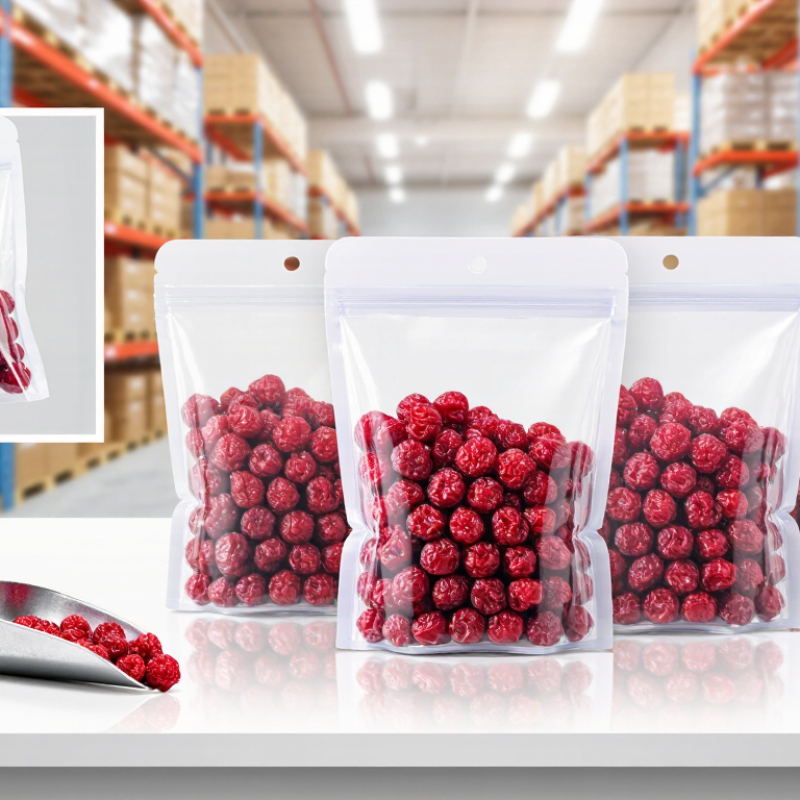
| Product Grading | U100 size grade | “U100” commonly indicates fewer than 100 dried cherry pieces per pound, meaning a relatively large fruit size. The exact count, tolerance, and counting method should be confirmed in the purchase specification. | Request a signed product specification and a representative pre-shipment sample because grading conventions may vary between suppliers and markets. |
| Retail Format | Net weight | 85 g The declared net weight should exclude the pouch, label, carton, and other packaging materials. | Use calibrated filling equipment and define the permitted average weight and individual pack weight tolerance in the contract. |
| Ingredient Profile | Formula and additives | Common formulations may contain dried cherries, sugar or fruit sweetener, and an acidity regulator. Sulfur dioxide or sulfites may be used in some products, but this depends on the formulation. | The ingredient list, allergen statement, additive declaration, and sulfite declaration must match the actual recipe and the destination-market regulations. |
| Quality Control | Appearance and defects | Typical requirements include uniform cherry color, a soft and chewy texture, absence of visible mold, infestation, foreign matter, abnormal fermentation, and unacceptable off-odors. | Define limits for broken pieces, stems, pits, darkened fruit, foreign material, and damaged packaging before production begins. |
| Moisture Management | Moisture and water activity | Commercial dried-fruit moisture often falls within an approximately 15%–20% range, but the correct value depends on the recipe and texture. A water-activity target of about 0.60–0.65 or lower is commonly used for improved shelf stability when compatible with the product texture. | Use a validated laboratory method and record both moisture and water activity. The final limits should be agreed with the buyer rather than assumed from the product name. |
| Primary Packaging | 85 g pouch or sachet | A heat-sealed flexible pouch made with a food-contact film is commonly used. PET/PE, BOPP/PE, or metallized laminate structures may be selected according to the required moisture, oxygen, and light barrier. | Confirm food-contact compliance for every packaging layer in the destination market. Check seal strength, leak resistance, print durability, and migration documentation. |
| Atmosphere Control | Oxygen and light protection | High-barrier film and, where appropriate, nitrogen flushing can help reduce oxidation, color changes, and quality loss. Oxygen absorbers should only be used after a packaging-safety assessment. | Validate residual oxygen, seal integrity, and package performance through shelf-life testing under the expected transport and storage conditions. |
| Outer Packaging | Cartons and palletization | Retail pouches are normally packed into corrugated export cartons with internal protection against crushing and moisture. Carton quantity, dimensions, gross weight, and pallet pattern depend on the buyer’s logistics plan. | Use a dry, clean, odor-free carton. Confirm carton markings, pallet dimensions, stretch-wrap requirements, and maximum stack height before loading. |
| Storage | Warehouse conditions | Store sealed packs in a cool, dry, clean, and well-ventilated area, protected from direct sunlight, heat, moisture, pests, and strong odors. Avoid contact with floors and exterior walls. | Use first-expired, first-out stock rotation. Keep the product away from chemicals and odor-releasing goods, and monitor temperature and relative humidity during storage. |
| Shelf Life | Best-before period | A sealed dried-cherry product may commonly be assigned approximately 9–12 months, and sometimes longer, depending on formulation, water activity, packaging barrier, and validated stability results. | Do not print a shelf-life period without supporting real-time or accelerated stability data and compliance with the importing country’s date-marking rules. |
| Food Safety | Testing and certificate of analysis | A batch COA may include moisture, water activity, microbiological results, sulfite level when applicable, pesticide-residue screening, heavy metals, and foreign-matter inspection. | The testing plan should reflect the destination country, raw-material risk assessment, customer requirements, and applicable food-safety management system. |
| Labeling | Retail label information | Common label elements include product name, ingredient list in descending order by weight, net quantity, nutrition information where required, lot code, best-before date, storage instructions, country of origin, and responsible food-business details. | Label language, nutrition format, allergen rules, additive names, date format, and origin wording must be checked against the destination-market legislation. |
| Traceability | Lot and production records | Each retail unit and export carton should be traceable to a production lot, ingredient records, packaging materials, processing date, and quality-control results. | Maintain a documented recall procedure and ensure the lot code remains legible throughout transport, storage, and retail handling. |
| Customs Classification | HS-code reference | Dried cherries are generally classified under the dried-fruit heading, commonly HS 0813.40 for “other fruit, dried,” subject to the exact national tariff schedule and product formulation. | Confirm the final tariff code with the importer or customs broker because national subdivisions, sweetening, preparation, and packaging may affect classification. |
| Export Documents | Core shipping documents | A typical export file may include a commercial invoice, packing list, transport document, certificate of origin when required, product specification, COA, and insurance documents where applicable. | A phytosanitary certificate, health certificate, import permit, or additional declaration may be required by the destination country and should be confirmed before shipment. |
| Transport | Container and loading conditions | Use a clean, dry, odor-free container with intact flooring and walls. Protect cartons from condensation, rain, prolonged heat, and direct sunlight during loading and transit. | For long-distance shipments, review temperature and humidity exposure, desiccant requirements, container ventilation, and cargo-insurance conditions with the logistics provider. |