How to Choose the Right Lithium Power Battery for Your Needs?
Choosing the right lithium power battery can be a daunting task. With various options available, understanding their unique features is essential. Each lithium power battery serves different needs, from household electronics to electric vehicles.
Consider your specific requirements. How long do you need the battery to last? What power output do you expect? These factors greatly impact your selection. New technologies emerge constantly, making it hard to stay updated. Researching battery types can save you time and potential frustration.
Additionally, think about reliability. Not all manufacturers are equal in quality. Look for reputable brands with a proven track record. User reviews can help guide you to trustworthy options. Ultimately, the right lithium power battery should enhance your experience, fulfilling your energy needs efficiently. Reflect on your choices and ensure you invest wisely.
Understanding Different Types of Lithium Power Batteries
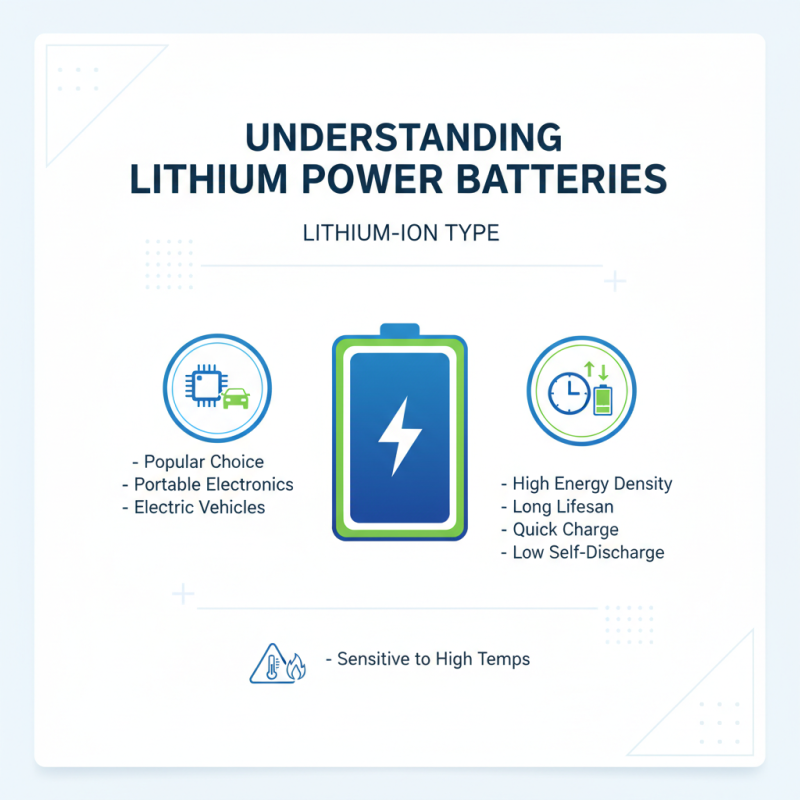
When choosing a lithium power battery, understanding the different types available is crucial. Lithium-ion batteries are popular for their balance of energy density and longevity. They charge quickly and have a low self-discharge rate. These batteries are commonly used in portable electronics and electric vehicles. However, they can be sensitive to high temperatures.
Lithium-polymer batteries offer a flexible shape and lighter weight, making them ideal for compact devices. They are often found in smartphones and drones. Despite their advantages, they may provide lower energy density compared to lithium-ion counterparts. Users must weigh these characteristics based on their device requirements.
Another option is lithium iron phosphate (LiFePO4). This type is known for its safety and thermal stability. However, its energy density is typically lower. Users frequently struggle with the trade-off between capacity and safety. Each battery type has its unique strengths and weaknesses, influencing personal choice. Understanding these details can lead to better decision-making. It's important to reflect on your specific needs and usage patterns before making a choice.
Evaluating Your Power Requirements and Usage Scenarios
When selecting a lithium power battery, understanding your power requirements is crucial. Battery capacity, measured in ampere-hours (Ah), significantly impacts performance. For instance, a device requiring 2A for five hours demands a 10Ah battery. According to the International Energy Agency, the global demand for lithium-ion batteries is projected to reach 2,400 GWh by 2030. This underscores the importance of making an informed choice.
Usage scenarios also dictate battery selection. For portable devices, weight and size matter. A lighter battery may enhance mobility but could compromise capacity. Data from Bloomberg New Energy Finance indicates that over 70% of electric vehicles utilize lithium-ion batteries. Evaluating battery cycles is important, too. Typically, lithium batteries last around 500-700 cycles. Each cycle reduces capacity, which can impact long-term use.
Consider environmental factors, such as temperature. Extreme conditions can diminish battery efficiency. Choosing a battery that suits your specific requirements involves careful reflection. Analyze your energy needs against the battery's specifications. Achieving the right balance can optimize performance and longevity.
How to Choose the Right Lithium Power Battery for Your Needs?
| Battery Type |
Voltage (V) |
Capacity (Ah) |
Cycle Life (Cycles) |
Weight (kg) |
Recommended Usage |
| Lithium Iron Phosphate (LiFePO4) |
12 |
100 |
2000 |
12 |
Solar Energy Storage |
| Lithium Cobalt Oxide (LiCoO2) |
3.7 |
2.2 |
500 |
0.048 |
Mobile Devices |
| Lithium Manganese Oxide (LiMn2O4) |
3.7 |
3.0 |
1000 |
0.065 |
Power Tools |
| Lithium Nickel Manganese Cobalt (NMC) |
3.7 |
5.0 |
1000 |
0.1 |
Electric Vehicles |
Key Features to Consider When Choosing a Lithium Battery
When choosing a lithium power battery, specific features play a crucial role. Capacity is one of the most significant factors. It determines how long the battery can power your devices. Most lithium batteries have a capacity range between 1000 mAh to over 30000 mAh. Selecting the right capacity helps avoid performance issues.
Another key feature is discharge rate. This rate indicates how quickly the battery can deliver its energy. For high-drain devices, a battery with a discharge rate of 25 C or more is often recommended. This ensures devices function optimally. Poor choices in discharge rates can lead to battery overheating or reduced lifespan.
Cycle life also matters. Cycle life defines how many charge and discharge cycles a battery can undergo before its capacity drops below a usable level. A quality lithium battery typically offers 2000 cycles or more. Investing in batteries with a higher cycle life brings long-term savings. These batteries may cost more upfront, but they provide better reliability and performance. Balancing all these features is essential for maximizing your investment.
Battery Capacity Comparison of Lithium Power Batteries
This chart displays the average cycle life in cycles for different lithium power battery capacities, allowing you to compare how lifespan varies with capacity. Higher capacity batteries generally offer improved cycle life, making them a better choice for long-term applications.
Comparing Price, Performance, and Lifespan of Lithium Batteries
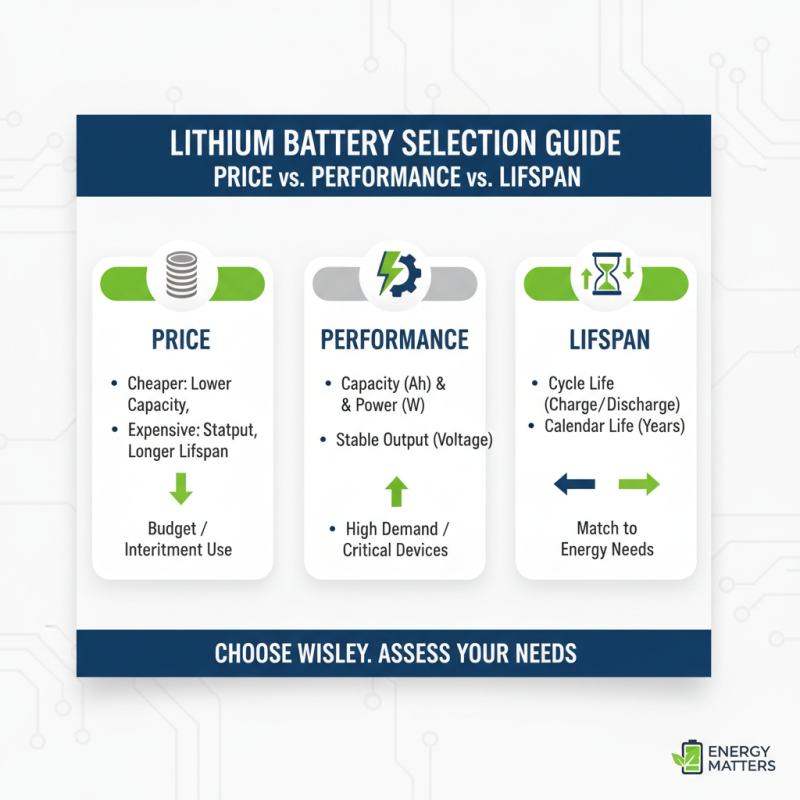
Choosing the right lithium power battery involves balancing price, performance, and lifespan carefully. Often, cheaper batteries seem attractive but may offer lower capacity and shorter cycle life. High-performance options usually cost more but provide stable output and longer usage before needing replacement. It’s essential to assess your energy needs precisely rather than relying on general ratings. For example, a battery intended for intermittent use might not require the highest cycle count, unlike one powering critical devices daily.
Tips: Check the battery’s rated capacity under real conditions, not just ideal specs. Manufacturers sometimes exaggerate numbers, which can lead to disappointment. Also, consider how temperature affects performance since lithium batteries vary widely in this regard.
Lifespan is tricky because it depends on usage patterns and charging habits. A battery with a longer cycle life isn’t always the best choice if you rarely drain it fully. Sometimes, a mid-range option gives better value despite a slightly shorter lifespan. Reflect on your usage carefully, but don’t overthink to paralysis—you can always upgrade later if needed. The goal is finding a practical balance, not perfection.
Understanding Maintenance and Safety Considerations for Lithium Batteries
When selecting a lithium battery, maintenance and safety are critical considerations. Lithium batteries, known for their energy density and efficiency, require specific handling to ensure optimal performance. Neglecting maintenance can lead to deterioration. According to industry research, improper care can reduce a battery's lifespan by up to 30%.
Regularly inspect battery terminals for signs of corrosion or wear. Clean them gently with a soft cloth. Overheating is a common issue; keep batteries in a cool environment. The recommended operating temperature is between 20 to 25 degrees Celsius. Higher temperatures can cause thermal runaway, a dangerous situation.
Tip: Store lithium batteries in a dry location. Humidity can damage battery performance. Monitor health by checking voltage levels periodically. If a battery shows significant voltage drop, you may need to reevaluate its usage or connections. Lastly, always follow disposal regulations. Lithium batteries can be hazardous to the environment if not disposed of properly. Stay informed and make decisions based on reliable data for safety and longevity.