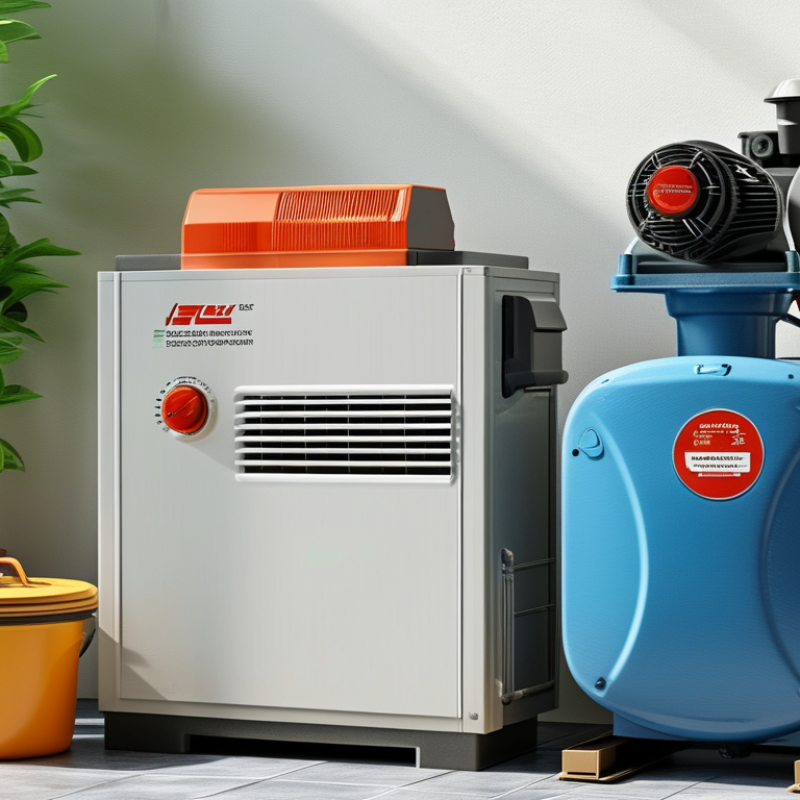
| Standard condensate removal pump | Removing evaporator-coil condensate when gravity drainage is not possible | Up to 1,000 gal/h
(3,785 L/h) | Up to 20 ft
(6.1 m) | 60–100 W | 40–55 dBA | 3–7 years | Low energy demand; reliability depends on clean sensing components, proper drainage, and protection against debris. |
| High-head condensate pump | Basements, commercial air handlers, or installations with long vertical discharge runs | Up to 1,500 gal/h
(5,678 L/h) | Up to 30 ft
(9.1 m) | 80–150 W | 45–60 dBA | 3–7 years | Provides greater lifting capacity but usually consumes more power; select a pump whose performance curve matches the actual discharge height. |
| ECM variable-speed circulation pump | Chilled-water or hydronic distribution systems requiring automatic flow adjustment | 2–20 gal/min
(7.6–75.7 L/min) | 5–25 ft
(1.5–7.6 m) | 15–200 W | 25–45 dBA | 8–15 years | Usually the most energy-efficient option for variable-load systems; soft starts and speed control can reduce vibration and mechanical stress. |
| Fixed-speed circulator pump | Simple, constant-flow chilled-water or fan-coil circuits | 2–25 gal/min
(7.6–94.6 L/min) | 5–30 ft
(1.5–9.1 m) | 40–250 W | 35–55 dBA | 7–12 years | Simple and serviceable, but it may use more electricity than necessary when system demand falls below the design point. |
| Dual-pump or backup condensate system | Critical cooling areas, server rooms, healthcare spaces, or installations where overflow damage is unacceptable | System-dependent | System-dependent | 100–300 W | 45–65 dBA | 5–10 years | Higher installed cost and energy use, but improved continuity through alarm contacts, redundant pumping, and automatic failure response. |