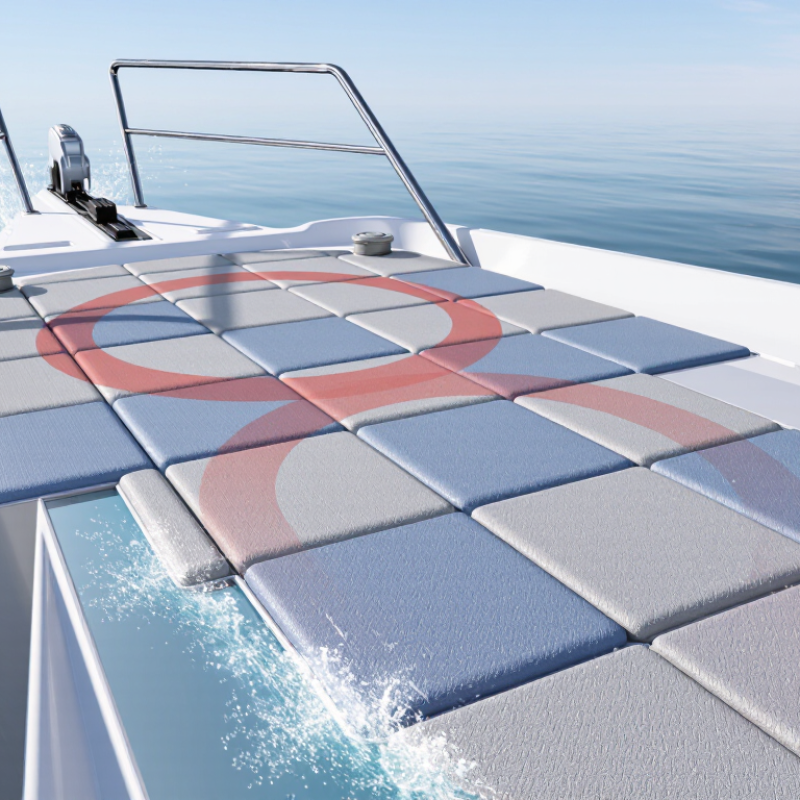
| Material Structure | Closed-cell EVA foam with a sealed, non-absorbent surface | Closed-cell foam limits water uptake, dries relatively quickly, and helps prevent the flooring from becoming waterlogged. | Confirm that the product is specifically designed for marine or outdoor use and ask for water-absorption test information. |
| Thickness | Approximately 5–10 mm for most walking areas; use thicker material where additional cushioning is needed | Thicker foam can improve comfort and impact absorption, while thinner sheets reduce height changes around hatches, thresholds, and fittings. | Measure hatch clearances, door gaps, drainage channels, and the height of surrounding hardware before installation. |
| Surface Texture | A textured, embossed, or grooved surface intended to improve wet-foot traction | Decks are frequently exposed to spray, rain, fish slime, sunscreen, and spilled drinks, all of which can reduce footing. | Request wet-slip test results when available and inspect whether grooves can drain water without trapping excessive dirt. |
| Color and Heat | Light or medium colors for hot, sunny decks; darker colors where appearance and stain concealment are priorities | Dark surfaces generally absorb more solar heat, which can make them uncomfortable under direct sunlight and may increase thermal movement. | Compare color samples in direct sunlight and review the supplier’s recommended service-temperature range. |
| UV and Weather Resistance | Material with documented resistance to ultraviolet exposure, saltwater, moisture, and outdoor temperature changes | Long-term sunlight and marine exposure can cause fading, surface degradation, adhesive failure, or loss of flexibility. | Look for accelerated-weathering data, outdoor-use guidance, and clear instructions for cleaning and protection. |
| Compression and Recovery | A resilient foam that compresses under normal foot traffic and recovers without remaining permanently depressed | High-use zones around helm stations, swim platforms, boarding areas, and cockpit seating receive repeated loading. | Ask for compression-set or recovery information and compare the intended use with the expected foot traffic and equipment loads. |
| Adhesive Compatibility | Marine-grade pressure-sensitive adhesive or a compatible adhesive system approved for the deck substrate | A durable foam can still fail if the adhesive is incompatible with fiberglass, aluminum, painted surfaces, wood, or existing coatings. | Verify substrate compatibility, application temperature, curing requirements, and resistance to water and heat. |
| Deck Preparation | A clean, dry, smooth, well-bonded, and contamination-free installation surface | Wax, oil, silicone, loose paint, oxidation, and moisture can prevent reliable adhesion and create bubbles or lifted edges. | Follow a preparation sequence that includes cleaning, degreasing, drying, and removal of unstable coatings before fitting the foam. |
| Drainage and Layout | Panels and grooves arranged so that scuppers, limber holes, drains, and inspection covers remain unobstructed | Blocked drainage can leave standing water beneath or around the flooring and may interfere with bilge, cockpit, or deck drainage. | Create a full-size template and mark all drains, fasteners, hatches, access panels, and removable components before cutting. |
| Maintenance | Routine rinsing with fresh water and cleaning with a mild, non-abrasive soap | Regular cleaning removes salt, organic residue, oils, and dirt that can stain the surface or reduce traction. | Avoid harsh solvents, strong acids, wire brushes, and aggressive pressure washing unless specifically approved for the product. |
| Safety and Accessibility | A stable, low-profile surface with clearly visible edges and no raised trip points | A comfortable deck covering should improve footing without creating hazards around steps, hatches, rails, or emergency equipment. | Inspect transitions, corners, seams, and edges after installation, especially in passageways and boarding areas. |
| Replacement Planning | Modular panels or accurately templated sections that can be removed and replaced individually | High-wear areas may age faster than low-traffic sections, so replaceable sections can reduce future repair time and material waste. | Keep digital or full-size templates, installation photographs, spare material, and the product’s color or texture information. |