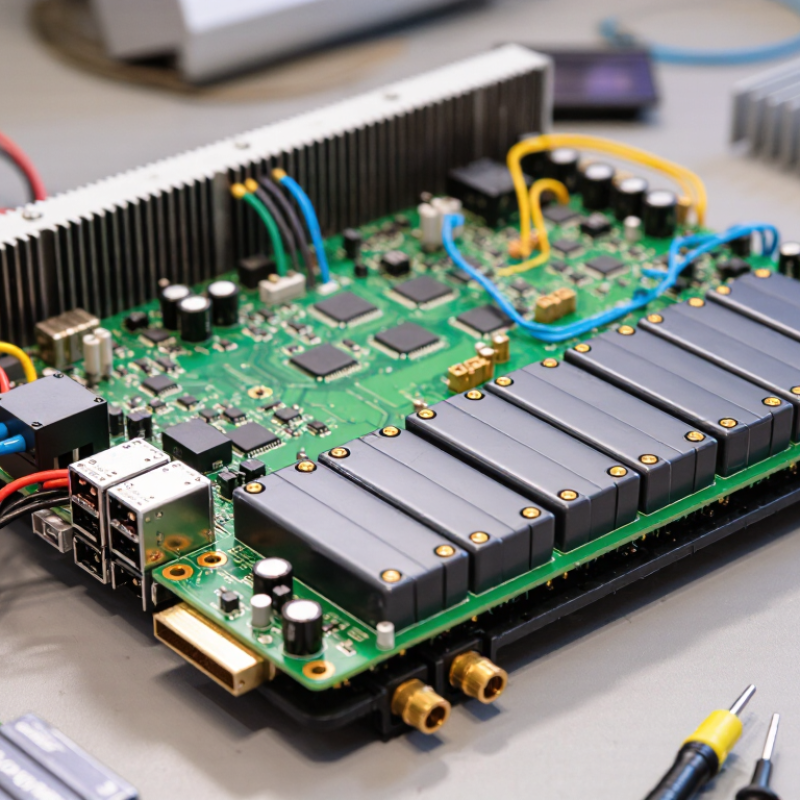
Choosing a BMS PCB requires more than matching battery voltage. The International Energy Agency reported that global electric vehicle battery demand exceeded 750 GWh in 2023, rising by about 40%. That growth increases pressure on protection circuits, thermal monitoring, and manufacturing consistency.
Compare voltage accuracy, current measurement, temperature range, and balancing speed. A practical BMS PCB should detect abnormal cells quickly, not merely display them. Check whether passive or active balancing suits the pack’s capacity and charging profile. Communication options also matter. CAN, UART, or wireless interfaces should provide event logs, fault codes, and firmware control. I prefer clear data trails.
Look closely at overvoltage, undervoltage, overcurrent, short-circuit, and thermal protections. Components should support relevant requirements, such as IEC 62619 for industrial lithium battery safety. Automotive designs may also need processes aligned with ISO 26262. These standards do not replace testing. They guide it. A higher current rating is not automatically safer; heat dissipation, copper thickness, connector limits, and enclosure airflow must agree. I still treat impressive datasheet accuracy cautiously, because calibration can change across temperature and production batches. Test samples under cold starts, uneven cell states, and repeated charging cycles. The imperfect result often reveals the honest specification.