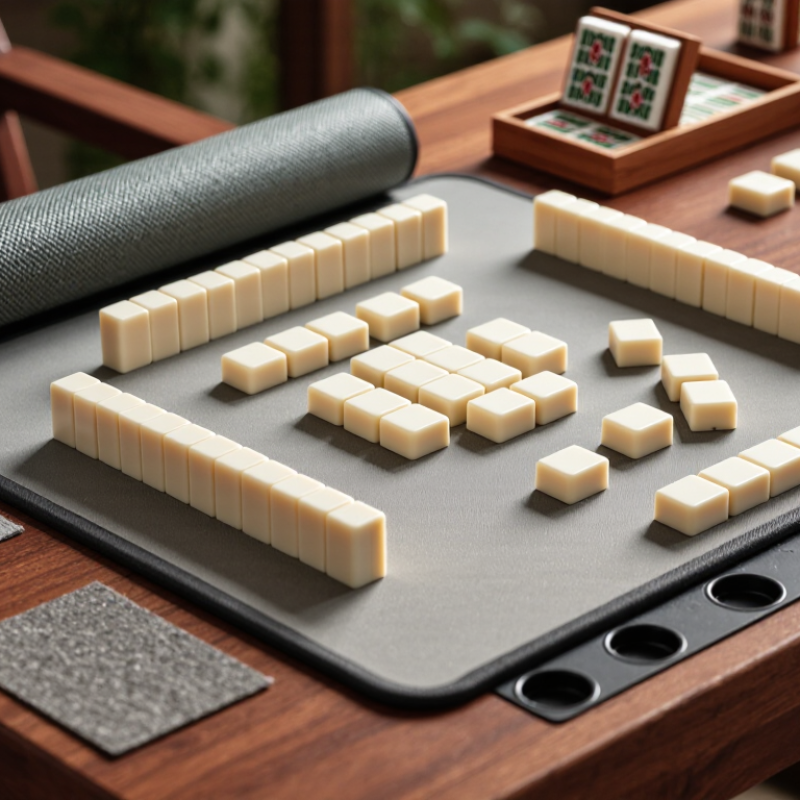
Choosing a mahjong table pad starts with the buyer’s setting, not only the playing surface. Home users may prefer a thin, foldable pad that fits inside a closet. Clubs often need dense backing, stable edges, and strong resistance to repeated cleaning. Hotels and distributors may request custom sizes, neutral colors, or retail-ready packaging.
Measure the table first. A few centimeters of error can create curled corners and uncomfortable play.
Material selection affects noise, grip, and maintenance. A polyester surface feels practical for frequent use, while rubber backing can reduce slipping on polished tables. Ask suppliers for thickness, weight, odor testing, washing guidance, and temperature limits. Request a physical sample before approving bulk production. Photos can hide uneven stitching. They often do.
Tips: Compare at least three suppliers using the same specification sheet. Check sample consistency, production capacity, inspection procedures, packaging strength, and replacement policies. A reliable supplier should provide clear drawings, realistic lead times, and traceable quality records. Buyers should also confirm import labeling and packaging rules in the destination market. These requirements vary by country and may change. Do not rely on verbal promises alone. Put approved materials, dimensions, tolerances, and inspection standards into the purchase agreement. A cheaper pad may reduce the initial budget, but early wear, odor, or poor folding performance can create higher costs later.