| Product Categories | The market includes grid-tied string inverters, central inverters, microinverters, hybrid inverters, and battery energy-storage inverters. Residential products are commonly designed for single-phase systems, while commercial and utility projects often use three-phase equipment. | Confirm the intended application, system voltage, phase configuration, maximum DC input, AC output, and whether the product is intended for residential, commercial, or utility-scale use. | Selecting the wrong inverter category can cause compatibility problems, unnecessary cost, or poor system performance. |
| Rated Power Range | Chinese suppliers offer products ranging from small residential units of several kilowatts to commercial and utility-scale units reaching hundreds of kilowatts or more. Exact power classes vary by product series. | Compare nominal AC power, maximum apparent power, maximum DC oversizing ratio, and the recommended photovoltaic array size shown on the official datasheet. | Correct power matching helps prevent clipping, overload, and inefficient operation under local solar conditions. |
| Inverter Topology | String architecture is widely used because it supports modular installation and easier maintenance. Central architecture is more common in large power stations, while microinverters are used where module-level control is valuable. | Check the number of MPPT channels, MPPT voltage range, maximum input current per channel, and the expected shading or roof-layout conditions. | Topology affects energy yield, installation flexibility, fault isolation, and maintenance requirements. |
| Conversion Efficiency | Modern transformerless photovoltaic inverters commonly advertise maximum efficiencies in the high-90% range. Maximum efficiency is not the same as weighted or European efficiency. | Review maximum efficiency, weighted efficiency, standby consumption, efficiency curves, and test conditions. Ask for independent laboratory reports when required. | Weighted efficiency provides a more useful comparison for expected annual energy production than a single peak-efficiency figure. |
| Grid Compatibility | Export-oriented products are often configured for different grid frequencies, voltages, protection settings, and country-specific connection requirements. | Confirm compliance with the destination grid code, including anti-islanding, voltage and frequency response, reactive-power control, and low-voltage ride-through where applicable. | Grid approval is a project requirement and cannot be assumed solely from the product’s nominal voltage or CE marking. |
| Applicable Standards | Depending on the target market, relevant requirements may include IEC 62109-1 and IEC 62109-2 for inverter safety, IEC 62116 for anti-islanding testing, IEC 61727 for utility-interconnected systems, and applicable national standards. | Request current certificates, test reports, certificate scope, issuing laboratory details, and confirmation that the documents apply to the exact model and hardware revision. | A certificate for a similar model or an outdated revision may not satisfy local authorities, utilities, or insurance providers. |
| Ingress and Environmental Protection | Outdoor photovoltaic inverters are commonly offered with IP65 or IP66-rated enclosures, although the actual rating depends on the model and test documentation. | Check the IP rating, operating-temperature range, humidity limits, corrosion category, altitude derating, cooling method, and suitability for coastal or dusty locations. | Environmental suitability directly affects service life, thermal performance, and warranty risk. |
| Safety and Protection Functions | Common functions include overvoltage and overcurrent protection, DC reverse-polarity protection, insulation monitoring, residual-current monitoring, anti-islanding, and optional or integrated surge protection. | Review the protection architecture, surge-protection type, replaceable components, fault-recording capability, and whether arc-fault detection is available for the target market. | Protection features reduce electrical hazards and can support compliance with local installation rules. |
| Energy-Storage Compatibility | Hybrid and battery inverters may support lithium-ion battery systems, backup loads, time-of-use operation, and export limitation. Compatibility is normally limited to specified battery voltage ranges and communication protocols. | Confirm approved battery models or protocols, voltage and current limits, backup transfer time, black-start capability, battery-management communication, and firmware compatibility. | A battery cannot be considered compatible merely because both devices use the same nominal voltage. |
| Monitoring and Communication | Typical interfaces include RS485, Ethernet, Wi-Fi, cellular communication, digital inputs, and cloud-based monitoring portals. Some products also support Modbus or other industrial communication methods. | Check data ownership, API availability, local-access options, update policy, cybersecurity controls, communication fees, and compatibility with the project’s monitoring platform. | Reliable and accessible data simplifies commissioning, preventive maintenance, and performance verification. |
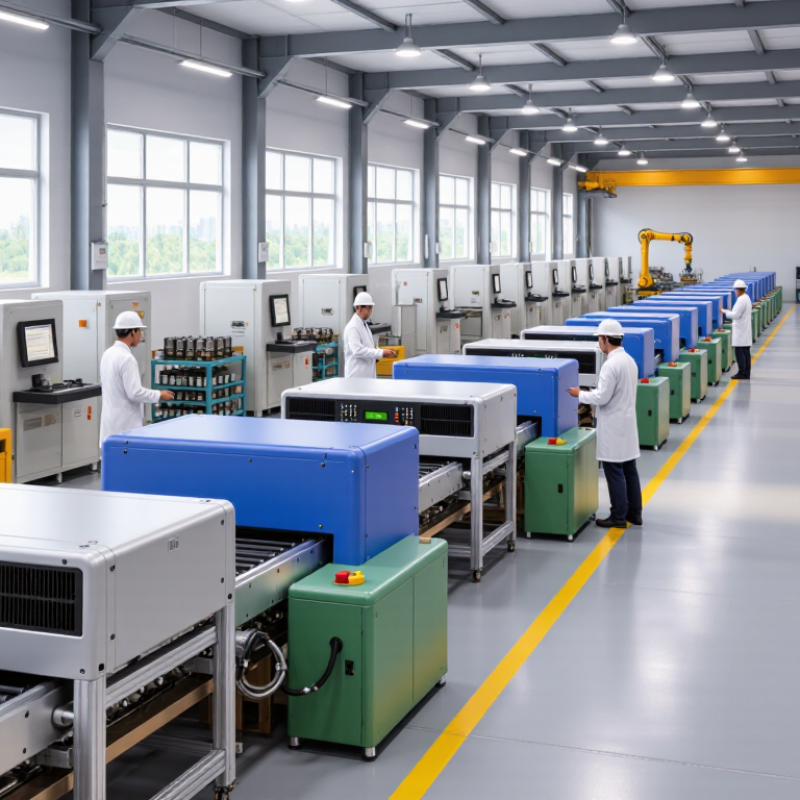
| Manufacturing and Quality Control | China has a broad electronics manufacturing base with automated assembly, supplier networks for power semiconductors and magnetic components, and both original-design and contract-manufacturing models. | Assess factory ownership, production-line capability, incoming-material inspection, end-of-line testing, traceability, calibration records, failure-analysis procedures, and quality-management certification. | A trading company, an original manufacturer, and a contract factory may provide very different levels of technical control and accountability. |
| Customization Capability | Suppliers may offer customized firmware settings, labels, communication interfaces, connector choices, enclosure designs, and packaging. Deep electrical or software changes usually require engineering validation. | Define the scope of customization, ownership of firmware and tooling, validation testing, minimum order quantity, engineering fees, and change-control procedures. | Uncontrolled customization can affect certification validity, spare parts, software updates, and long-term serviceability. |
| Warranty and After-Sales Support | Warranty periods vary by supplier and product series; five-year base warranties and paid extensions are commonly offered, but terms are not uniform across the market. | Review warranty duration, exclusions, replacement or repair policy, response times, regional service locations, spare-parts availability, and responsibility for transportation costs. | Service capability can have a greater effect on lifecycle cost than a small difference in initial purchase price. |
| Export Documentation | International shipments may require commercial invoices, packing lists, certificates of origin, product manuals, safety documents, test reports, and transport documentation for lithium batteries when batteries are included. | Confirm document language, model consistency, customs classification, packaging requirements, shipping terms, and whether destination-country approvals are available. | Incomplete or inconsistent documentation can delay customs clearance, installation approval, or project financing. |
| Total Cost of Ownership | The purchase price is only one cost element. Freight, tariffs, commissioning, monitoring subscriptions, replacement parts, downtime, warranty handling, and local labor can materially affect the final cost. | Compare delivered cost, installation time, expected maintenance, service response, warranty logistics, efficiency, and projected replacement requirements over the system life. | A lower factory quotation does not necessarily produce the lowest lifetime project cost. |
| Supplier Due Diligence | The market includes established manufacturers, specialized producers, OEM suppliers, distributors, and trading companies. Company capability can differ significantly even when product specifications appear similar. | Verify legal entity information, factory address, production capacity, export history, product liability coverage, reference installations, audit results, and the identity of the certificate holder. | Due diligence reduces the risk of counterfeit documents, inconsistent production, unavailable support, and supplier failure. |