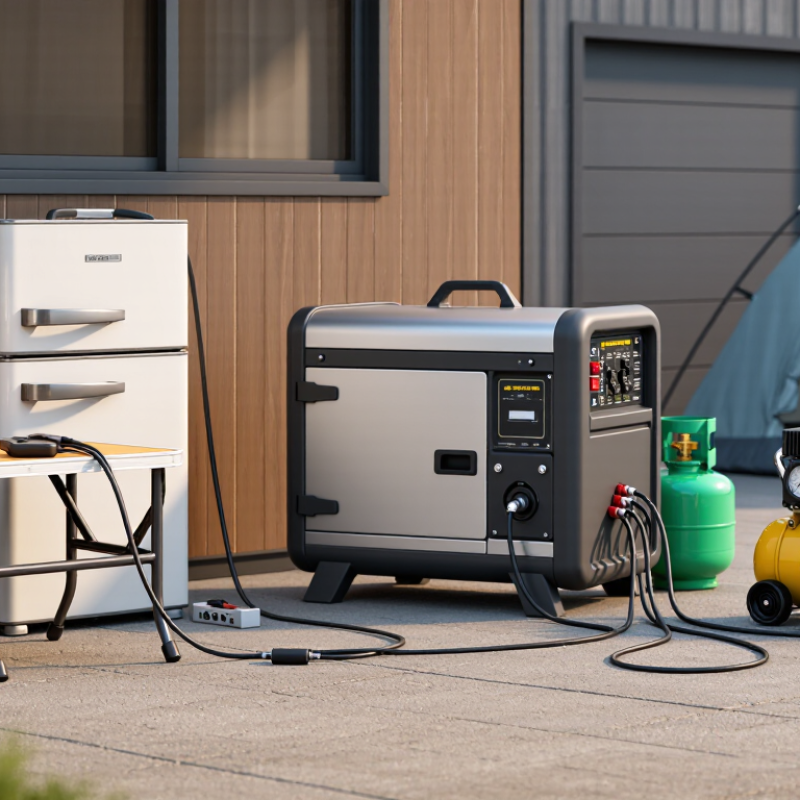
Fuel choice affects storage, refueling, and performance. Gasoline generators are widely available, but fuel may not keep well during long storage. Propane stores longer when handled properly, though its output can vary with temperature. Diesel models often suit extended, steady operation, but they can be heavier and louder. Compare these trade-offs with your actual use, not just the advertised maximum output.
Runtime figures matter most at rated load, the continuous output a generator is designed to provide. Check the manual’s runtime and tank capacity at that load; a larger tank does not always mean proportionally longer operation. For example, a unit with a 5-gallon tank might run for about eight hours at rated load, but the exact figure depends on design and conditions. A refrigerator cycling on and off may draw less than a constant-rated load. Still, real demand can change.
Tips: List the appliances you expect to run and add their running watts. Note startup surges for motors, such as pumps or refrigerators. Compare fuel use and runtime at the load you’ll actually need, if the manufacturer provides that data. Leave a margin. And check refueling guidance before buying. I once assumed a bigger tank was the simplest answer; it wasn’t, because portability and safe storage mattered too.