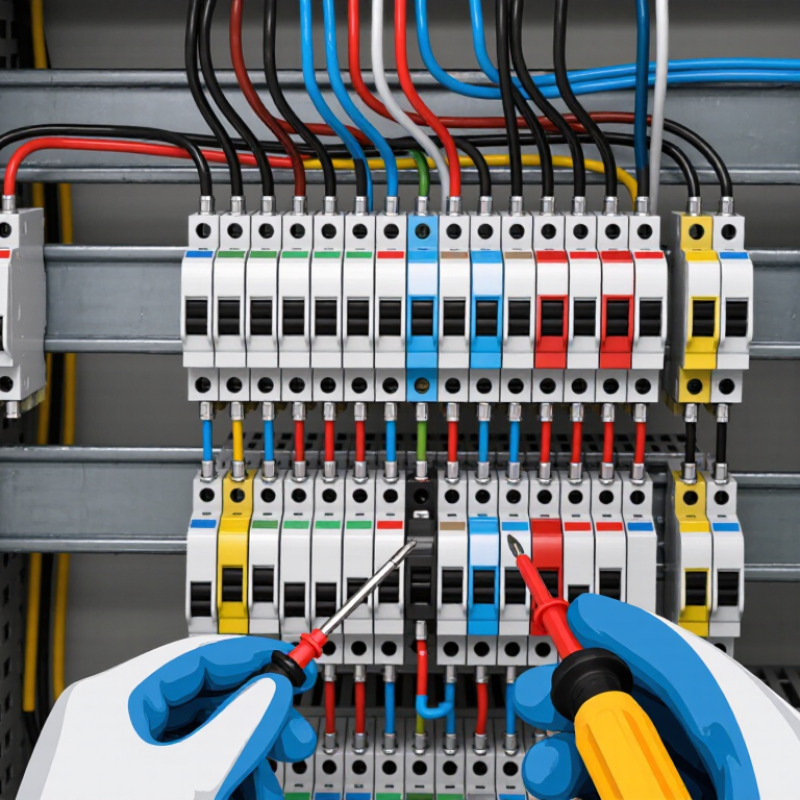
Define the Electrical and Mechanical Requirements
Choosing a terminal block starts with its electrical duty. Record the circuit voltage, continuous current, and expected short-term surge. Do not size it from normal readings alone. Motors, heaters, and switching loads can create extra stress. Check the rated wire range and temperature rating together. A terminal block carrying 20 amps in a cool cabinet may need derating inside a hot enclosure. In field work, I also verify the conductor material and insulation type before selecting a connection system. These details affect contact heating and long-term reliability.
Mechanical requirements deserve equal attention. Confirm the wire cross-section, entry direction, mounting method, and available panel space. Measure the enclosure before ordering. Small details matter. Vibration may loosen a poorly secured conductor, while repeated maintenance can damage a weak clamp. Choose suitable spacing for insulation, tools, and safe access. Consider labeling, finger protection, corrosion resistance, and the required tightening torque. A compact design can save space, but it may make inspection and servicing harder.
Testing should reflect real installation conditions. Build a sample assembly, apply the expected load, and inspect temperature rise after several hours. Use a calibrated torque tool and perform a gentle pull test on each wire. I once focused too heavily on current capacity and overlooked access for a screwdriver. That shortcut was inconvenient. More importantly, it slowed maintenance and encouraged rushed work. Review the selection with the installer, not only the designer. Their practical feedback often exposes requirements missing from the original drawing.