What Are Micro Switches and How Do They Work?
micro switches are small, efficient devices crucial in various applications. Their unique design allows them to act as a key component in different machinery and electronics. These switches respond to minimal force, making them ideal for sensitive operations.
Understanding micro switches involves exploring their construction and functionality. These switches consist of a movable arm and a spring, which work together to open or close an electrical circuit. When the arm is pressed, it triggers a quick response. This rapid action contributes to their popularity in devices like computer mice and household appliances. However, their small size can sometimes lead to underestimating their importance.
Despite their efficiency, micro switches have limitations. They can wear out over time, leading to malfunctions. This raises questions about their long-term reliability in critical systems. Evaluating these aspects helps in making informed choices when selecting micro switches for specific applications.
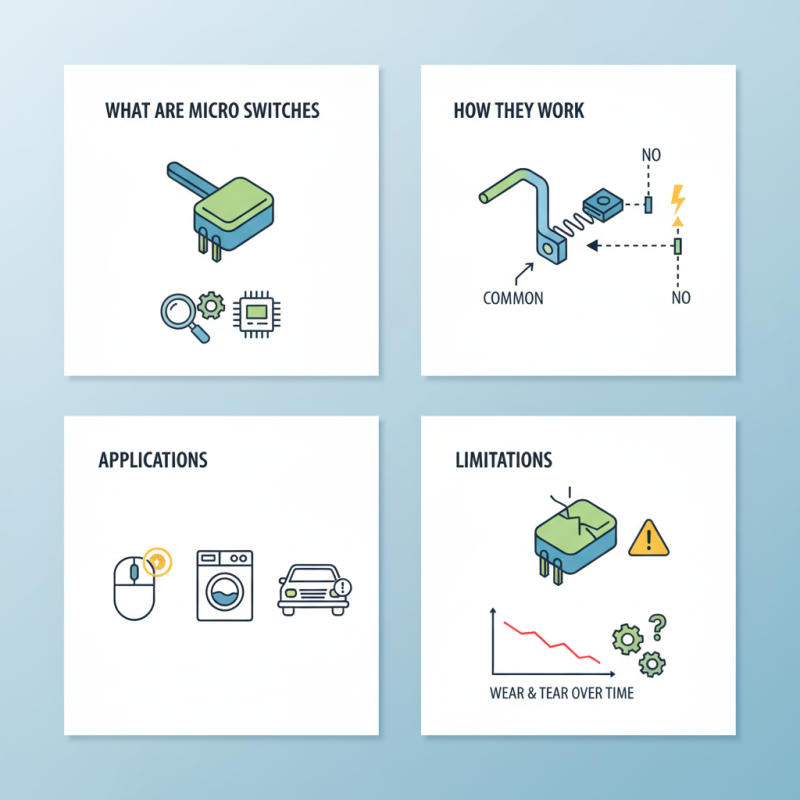
Definition and Overview of Micro Switches
Micro switches are small yet powerful devices widely used in various applications. They act as electronic switches that respond to mechanical pressure. When this pressure is applied, the switch activates or deactivates a circuit quickly and efficiently. Their compact size allows them to fit into tight spaces, making them ideal for numerous gadgets.
The mechanism behind micro switches is fascinating. They contain a spring-loaded arm that gets triggered by even a light touch. This design enables them to work effectively in numerous settings, from appliances to security devices. However, the precision and sensitivity can sometimes lead to accidental activation. It is crucial to position them carefully. While they are reliable, environmental factors can also affect their performance. Dust and moisture may hinder their functionality.
Overall, micro switches play a vital role in modern technology. Their simple yet effective design is central to automation in many sectors. Despite their small size, these switches can be a source of frustration without proper attention and maintenance. Understanding how they work is the first step toward using them effectively.
Key Components and Construction of Micro Switches
Micro switches, often found in various devices, have a unique construction that defines their functionality. At the core of a micro switch is a small actuator. This actuator is responsible for detecting motion. When pressure is applied, the actuator triggers an internal mechanism. This mechanism includes contact points that close the circuit. The resulting electrical signal activates the connected device.
The housing of a micro switch is another critical component. It protects the internal parts from dust and damage. Typically made of durable materials, the housing ensures longevity. Inside, springs play a vital role. They return the actuator to its original position after being pressed. This design allows for quick operation, making micro switches ideal in many applications.
However, not all micro switches are created equal. Some may suffer from inconsistent actuation. This can lead to reliability issues in devices. Regular maintenance is essential to address such concerns. Keeping switches clean and free from debris will ensure they perform optimally. Also, the choice of material affects durability. Some materials may not withstand frequent use. These factors are crucial to consider when selecting micro switches for specific applications.
How Micro Switches Function: The Mechanism Explained
Micro switches are simple yet effective components used in various devices. Their mechanism relies on a lever or button that activates an internal switch when pressed. This action creates an electrical connection, allowing current to flow. Micro switches respond quickly, making them ideal for applications like door sensors, appliances, and control panels. The design is compact, often featuring a spring mechanism that makes these switches responsive and durable.
How do they function? The internal components consist of a small actuator and contacts. When the actuator is pushed, it moves the contacts into position. This movement is often very slight but results in a significant change in state. The precision of micro switches allows for reliable operation, even in harsh conditions. However, the lifetime of these switches can vary, depending on usage and environmental factors. Some may fail sooner than expected, especially if they are exposed to dust or moisture.
Regular maintenance checks can help prevent premature failure and ensure optimal function.
Common Applications of Micro Switches in Various Industries
Micro switches are essential components in various industries, used for a variety of applications. These switches are compact and sensitive, providing reliable operation in critical systems. According to industry reports, micro switches are widely utilized in appliances, automotive systems, and industrial machinery due to their accuracy and durability.
In home appliances, micro switches operate in devices like refrigerators and washing machines. They help detect door positions and control functionality. This ensures safety and efficiency. In the automotive sector, they are often used in seat belt reminders and gear shifting mechanisms. Their quick response time is vital for enhancing user safety and driving experience.
**Tip:** Regularly check micro switches for wear and tear to maintain optimal performance. Poor maintenance can lead to premature failure.
Micro switches are also prevalent in manufacturing. They are key in quality control systems and automated machinery. In this setting, they help detect product presence or count items on assembly lines. Despite their small size, their role is crucial for maintaining efficiency and safety standards. However, not all installations consider environmental factors. This can lead to unexpected failures. Understanding the operating conditions is essential for long-term reliability.
**Tip:** Ensure that your micro switches are specified correctly based on application conditions to avoid issues.
Micro Switches and Their Applications
| Industry | Common Applications | Micro Switch Functionality |
| Automotive | Door sensors, seatbelt warnings | Detects the opening/closing of doors |
| Home Appliances | Oven timers, washing machines | Controls operational states based on user input |
| Industrial Equipment | Conveyor belts, safety guards | Ensures equipment safety and monitors status |
| Consumer Electronics | Remote controls, computer mice | Registers button presses for device interaction |
| Aerospace | Landing gear indicators, control systems | Indicates critical system statuses for safety |
Advantages and Limitations of Using Micro Switches
Micro switches are compact mechanical switches activated by very little force. They are widely used in various applications like appliances and safety devices. Their design allows for quick and reliable operation, which is essential in many systems. However, using micro switches comes with both advantages and limitations.
One major advantage is their responsiveness. They can quickly toggle on and off, which is crucial in devices requiring precision. They also have a long life span thanks to their robust construction. Plus, they are relatively inexpensive, making them popular in consumer products.
However, they can be sensitive. Excessive force or incorrect installation can lead to malfunction. In challenging environments, moisture or dust may affect their performance.
While micro switches serve many purposes well, they aren't always the best option. For heavy-duty applications, they may wear out too fast. Their size can also be a limitation in larger systems, where bigger switches might be more appropriate. Users must weigh these factors when choosing switches for projects. The balance between benefits and drawbacks is critical for optimal performance.