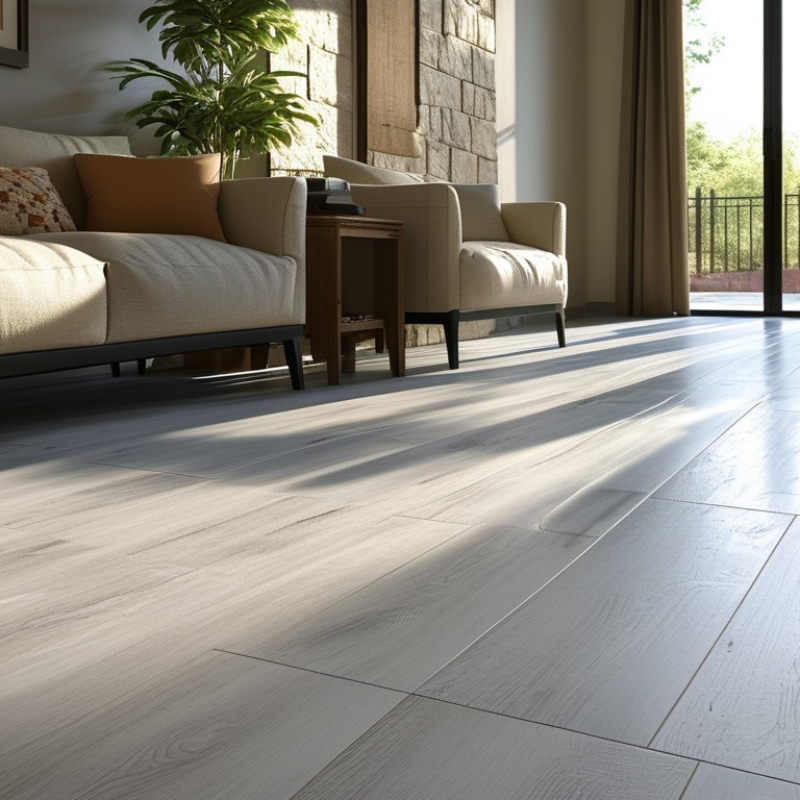
| Definition | Stone plastic flooring, commonly called SPC flooring, is a rigid-core resilient floor covering made primarily from polyvinyl chloride and mineral filler, often calcium carbonate. | The term “stone” refers to the mineral component in the core. The product is not a solid stone floor and is generally lighter and easier to install than natural stone. |
| Core Structure | A typical SPC plank or tile includes a wear layer, printed decorative film, rigid mineral-polymer core, and a balancing or backing layer. | The layered construction provides surface protection, dimensional stability, decorative flexibility, and improved comfort compared with hard masonry surfaces. |
| Typical Thickness | Many residential and light-commercial products are approximately 3.5–8 mm thick, excluding or including an attached underlay depending on the specification. | Thickness alone does not determine quality. Wear-layer thickness, locking-system design, core density, and subfloor preparation also affect performance. |
| Surface Wear Layer | Common wear-layer specifications range from approximately 0.20–0.55 mm, although products vary by market and application. | A thicker wear layer generally offers better resistance to abrasion and is more suitable for busy residential or commercial areas. |
| Durability | SPC flooring is generally resistant to dents, everyday abrasion, and household impacts because its rigid core is more dimensionally stable than many softer flexible vinyl floors. | It can provide a long service life when correctly selected, installed, and maintained, but it is not immune to scratches, chips, or damage from heavy point loads. |
| Water Resistance | The SPC core itself is typically water-resistant, and many products are marketed as waterproof when the joints are correctly fitted. | It is suitable for areas exposed to occasional spills. However, standing water can enter through poorly sealed edges or joints and may damage the subfloor. |
| Moisture-Sensitive Locations | Common suitable areas include kitchens, bathrooms, laundry rooms, entrance halls, and basements, subject to the product’s installation instructions. | Wet-room use depends on perimeter sealing, drainage, adhesive or click-system requirements, and local building practice. It should not be treated as a substitute for a fully waterproof room system. |
| Common Residential Uses | Living rooms, bedrooms, dining areas, hallways, home offices, kitchens, bathrooms, and finished basements. | Its wood, stone, and tile visuals allow one flooring style to continue across several rooms with relatively low routine maintenance. |
| Common Commercial Uses | Retail spaces, offices, reception areas, cafés, hotel rooms, corridors, rental properties, and other light- to medium-traffic interiors. | Commercial suitability depends on the wear-layer rating, installation method, rolling-load requirements, fire classification, and expected traffic level. |
| Subfloor Requirements | The subfloor should be clean, dry, stable, sufficiently level, and free from loose material. Concrete subfloors may require moisture testing. | Unevenness can cause joint stress, gaps, movement, or visible imperfections. Rigid flooring does not eliminate the need for proper subfloor preparation. |
| Installation Method | Many products use a floating click-lock installation, while some are glued down. Expansion gaps may be required around walls and fixed objects. | Floating installation can be faster and cleaner, but the floor must not be trapped beneath fixed cabinetry unless the product instructions specifically permit it. |
| Maintenance | Routine care usually consists of sweeping or vacuuming, prompt removal of spills, and damp mopping with a cleaner recommended for resilient flooring. | Regular cleaning helps prevent grit from acting as an abrasive. Excessive water, steam cleaning, harsh chemicals, and abrasive tools may damage the finish. |
| Temperature Stability | The rigid core offers good dimensional stability, but direct sunlight, rapid temperature changes, and extreme heat can still cause movement or discoloration. | Use window coverings where necessary and follow the manufacturer’s limits for indoor temperature, acclimation, and installation conditions. |
| Furniture and Heavy Loads | Normal household furniture is generally acceptable when it has suitable protective pads and is moved rather than dragged. | Very heavy furniture, narrow casters, sharp legs, and concentrated loads can dent, separate, or damage planks. Wide, non-staining protectors are preferable. |
| Comfort and Sound | SPC flooring is harder underfoot than flexible vinyl and may sound more resonant without an acoustic underlay or suitable subfloor. | Underlay selection can improve sound and comfort, but only products approved for the flooring system should be used because excessive softness may stress click joints. |
| Key Limitations | Potential issues include scratching from abrasive grit, chipped edges from impact, visible subfloor irregularities, joint separation from poor installation, and thermal movement. | Its durability is highly dependent on product specification, site conditions, installation quality, and daily use rather than on the “stone” description alone. |
| Overall Assessment | SPC flooring is a durable, low-maintenance option for many residential and light-commercial interiors, particularly where water resistance and dimensional stability are important. | Choose the wear layer and performance classification according to traffic, verify moisture and subfloor conditions, and follow the installation and care instructions for the selected product. |