| Twin-Shaft Concrete Mixer | 1.0–6.0 m³ per batch | Two horizontal counter-rotating shafts fitted with mixing arms and paddles. | Electric motors with gear reducers; hydraulic systems may be used for discharge gates. | Commercial concrete plants, precast concrete, large infrastructure projects, and concrete products. | Fast and highly uniform mixing with strong aggregate movement. Requires accurate maintenance of paddles, liners, seals, and discharge components. |
| Planetary Concrete Mixer | 0.25–4.5 m³ per batch | Mixing tools rotate around their own axes while orbiting inside a vertical mixing pan. | Electric motor and planetary gearbox. | Precast elements, dry concrete products, pavers, blocks, tiles, and high-performance concrete. | Provides intensive mixing and good color or additive dispersion. The vertical design is suitable for relatively stiff and low-slump materials. |
| Pan Concrete Mixer | 0.1–2.0 m³ per batch | Vertical mixing tools rotate inside a stationary circular pan. | Electric motor with belt, chain, or gear transmission. | Small precast facilities, laboratories, construction sites, blocks, and mortar production. | Compact and comparatively simple to operate. Mixing performance depends on tool arrangement, fill level, and material moisture. |
| Single-Shaft Horizontal Mixer | 0.5–4.0 m³ per batch | One horizontal shaft rotates paddles or blades through the material. | Electric motor with gearbox; pneumatic or hydraulic discharge options are available. | Ready-mix concrete, stabilized soil, mortar, and general batching operations. | Versatile and generally easier to maintain than twin-shaft equipment. It may have lower throughput and mixing intensity for demanding formulations. |
| Drum Concrete Mixer | 0.1–9.0 m³ per batch | A rotating drum lifts and tumbles materials using internal blades. | Electric motor, diesel engine, or hydraulic drive depending on the model. | Small building projects, rural construction, repair work, and mobile batching. | Simple construction and flexible operation. Tilting or reversing drums may require more manual control and usually provide less intensive mixing than forced-action mixers. |
| Tilting Drum Mixer | 0.1–1.5 m³ per batch | A rotating drum mixes materials and tilts to discharge the batch. | Electric motor or diesel engine with mechanical or hydraulic tilting. | Construction sites where rapid loading and discharge are needed. | Convenient discharge and relatively low operating complexity. The machine needs stable ground and sufficient clearance for drum movement. |
| Reversing Drum Mixer | 0.1–1.0 m³ per batch | The drum rotates in one direction for mixing and reverses direction to discharge. | Electric motor or diesel engine with reversing transmission. | Small and medium construction projects, concrete repair, and remote work locations. | Does not normally require drum tilting. Correct blade condition and drum rotation control are important for consistent discharge. |
| Self-Loading Mobile Concrete Mixer | 1.0–6.5 m³ per batch | A vehicle-mounted or self-propelled drum loads, weighs, mixes, transports, and discharges materials. | Diesel engine, hydraulic transmission, hydraulic steering, and hydraulic drum drive. | Remote construction, road projects, rural infrastructure, and sites without a fixed batching plant. | Combines batching and transportation in one machine. Payload, road regulations, axle load, water metering, and operator visibility should be checked before purchase. |
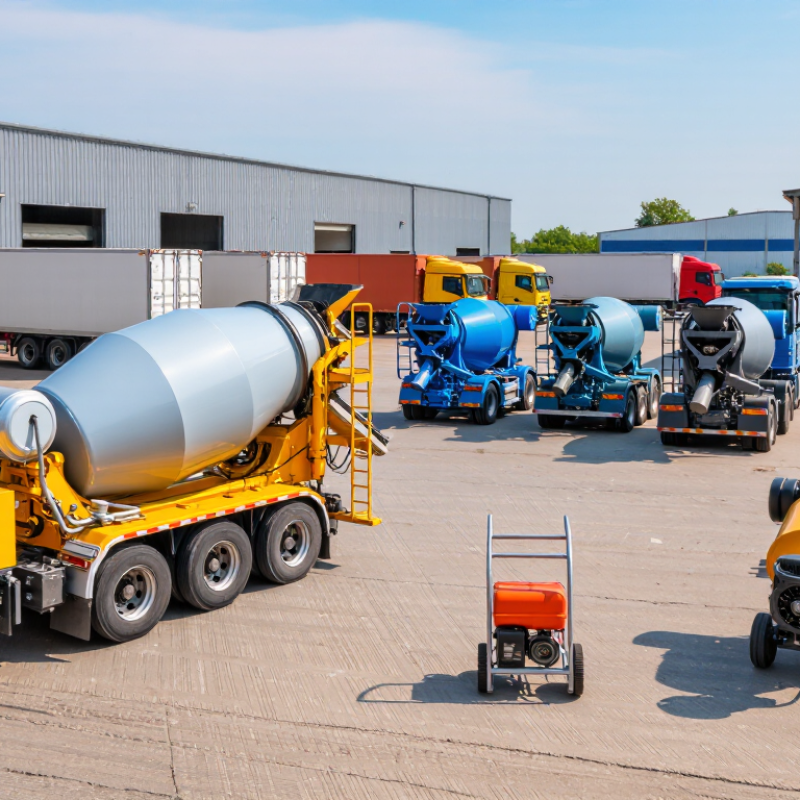
| Truck-Mounted Transit Mixer | 2.0–16.0 m³ per load | A continuously rotating spiral-bladed drum keeps fresh concrete agitated during transportation. | Truck diesel engine with hydraulic drum drive. | Ready-mix delivery from a central batching plant to construction sites. | Suitable for transporting fresh concrete over practical delivery distances. Actual usable volume depends on truck chassis, axle limits, concrete density, and local road regulations. |
| Continuous Concrete Mixer | Approximately 5–60 m³ per hour | Aggregates, cement, water, and additives are fed continuously and mixed while moving through the mixing chamber. | Electric, diesel, or hydraulic drive depending on the equipment configuration. | Road foundations, soil stabilization, shotcrete support, mining, and large-volume placement. | Supports continuous production and can reduce batch interruptions. Accurate proportioning and stable material feeding are essential for uniform output. |
| Mortar Mixer | 0.1–2.0 m³ per batch | Paddles, shafts, or rotating blades blend cement, sand, water, and chemical admixtures. | Electric motor is common; diesel versions are available for remote work. | Plastering mortar, masonry mortar, floor screed, tile adhesive, and repair compounds. | Designed for finer materials and smaller batches. It should not be selected solely by volume because mortar viscosity and moisture content affect motor load. |
| Dry Mortar Mixer | 0.5–8.0 tonnes per batch | Horizontal or vertical forced-action mixing of dry powders and granular materials. | Electric motor with gear reducer; pneumatic conveying and automated dosing may be integrated. | Dry-mix mortar plants, putty powder, tile adhesive, insulation mortar, and specialty construction chemicals. | Provides controlled blending of dry ingredients. Dust collection, wear protection, additive dosing accuracy, and cleaning access are important selection criteria. |
| Laboratory Concrete Mixer | 20–200 litres per batch | Small-scale pan, planetary, or drum mixing with controlled material quantities. | Electric motor with variable-speed or fixed-speed drive. | Material testing, mix design, research, quality control, and university laboratories. | Offers repeatable small-batch testing and lower material consumption. It is not intended to represent the throughput or wear conditions of full-scale production equipment. |