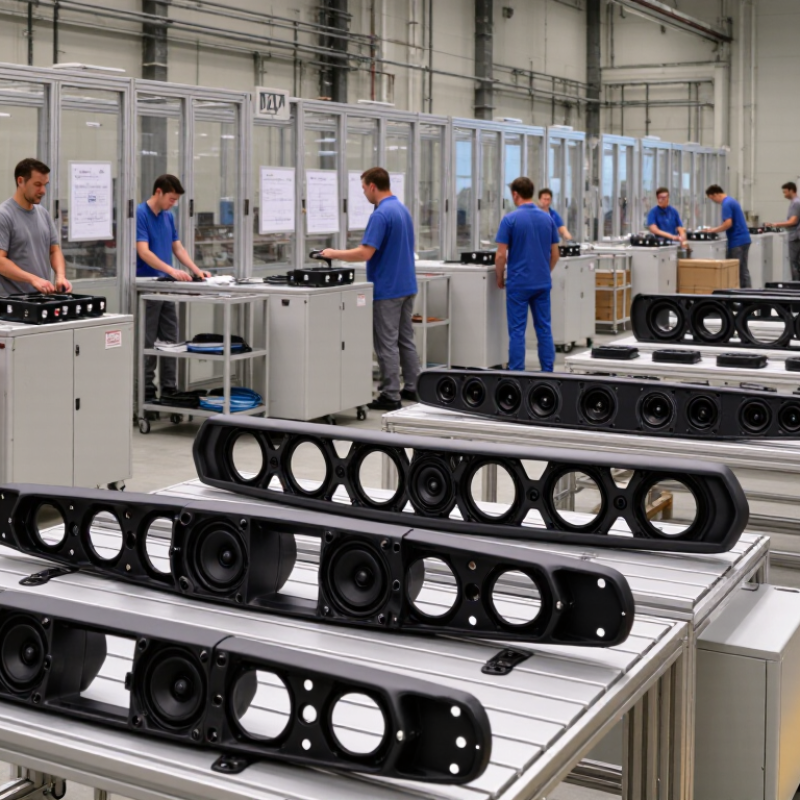
For global ATV sound bar buyers, certification is more than a logo on a carton. Ask for test reports, certificate numbers, laboratory scope, and model-specific evidence. CE, FCC, UKCA, RoHS, and REACH requirements vary by destination. EMC testing should address radio interference, while IEC 60529 testing confirms the claimed IP rating. A recent Grand View Research report valued the global portable speaker market at approximately USD 7.1 billion in 2023, showing why documentation quality matters in a crowded supply chain.
Durability must match real trail conditions. Check vibration testing, salt spray exposure, UV resistance, connector sealing, and operating temperature. Automotive test practices, including vibration and thermal-cycle methods referenced by SAE J1455, can help buyers compare suppliers. Do not accept “waterproof” without an IP test report. A certificate alone is not proof of trail survival. I would also request production samples and inspect the gasket, mounting brackets, wire strain relief, and grille after repeated impact tests. Small weaknesses become expensive failures.
Compatibility needs equal attention. Confirm 12-volt or 24-volt input limits, current draw, Bluetooth profiles, wired audio inputs, amplifier load, and controller compatibility. Ask whether the unit retains memory after voltage interruption. The 2024 MarketsandMarkets wireless audio market analysis identifies connectivity as a major growth driver, but wireless range claims remain inconsistent. Test the sound bar beside the vehicle, under engine noise, and with gloves on. Some specifications look precise, yet they still need independent verification.