2026 Top Epoxy Resin Transformer Manufacturers Worldwide
The 2026 global market for Epoxy Resin Transformer manufacturers reflects a practical shift toward safer, quieter, and more reliable distribution systems. These transformers are increasingly used in hospitals, rail networks, renewable-energy facilities, data centers, and high-rise buildings. Their dry-type construction reduces fire risk and simplifies indoor installation. Yet resin technology alone does not guarantee dependable performance.
Martin J. Heathcote, a respected transformer-industry author, wrote, “A transformer’s reliability depends on the quality of its insulation system.” This principle remains highly relevant. Manufacturers must control resin mixing, vacuum casting, curing temperature, and moisture protection. Small defects can create partial discharge inside the winding. The damage may remain invisible for years.
This guide examines leading Epoxy Resin Transformer manufacturers worldwide through practical and technical criteria. It considers rated capacity, voltage range, thermal class, energy efficiency, noise levels, short-circuit strength, testing procedures, and after-sales support. Compliance with IEC 60076 and relevant regional standards also matters. A polished factory brochure is not enough.
Real project evidence matters more.
Field performance, inspection records, delivery discipline, and service response often reveal more than marketing claims. Some manufacturers offer excellent engineering but limited local support. Others provide broad distribution but inconsistent customization. That difference deserves careful attention.
The ranking may not be perfect. Public data can be incomplete, and regional specifications vary. Buyers should verify factory certificates, test reports, references, and warranty terms before making a final decision. The strongest supplier is not always the largest one. It is the manufacturer that can deliver stable insulation quality, documented testing, and dependable support throughout the transformer’s working life.
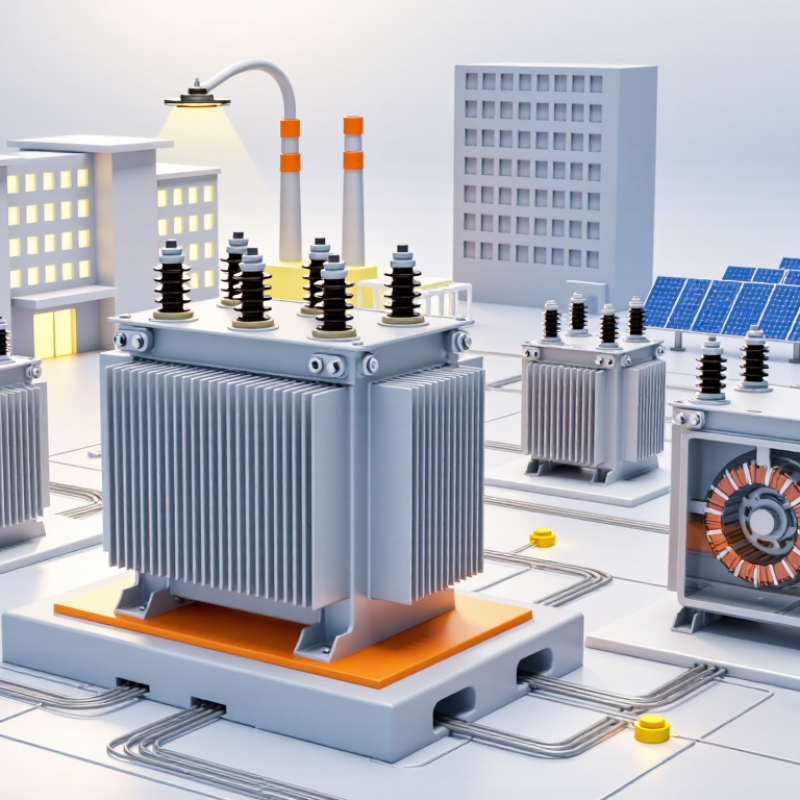
Epoxy Resin Transformers: Types, Ratings up to 36 kV, and IEC 60076-11
Epoxy resin transformers are dry-type units designed for safer indoor substations, commercial buildings, tunnels, and industrial plants. Their windings are encapsulated in cured epoxy, which limits moisture absorption and reduces fire risk compared with oil-filled equipment. Cast-resin construction is common, while other dry-type designs may use varnish impregnation instead of complete encapsulation.
Common ratings include 6.6 kV, 11 kV, 22 kV, and 33 kV, with equipment designed up to 36 kV. The selected rating must match the network voltage, insulation level, load profile, altitude, and cooling conditions. Typical capacities range from small distribution units to several megavolt-amperes. Air natural cooling is widely used. Fans may support higher temporary loading, but they cannot correct poor ventilation.
IEC 60076-11 provides the main framework for dry-type transformer design and testing. It addresses temperature-rise limits, insulation performance, dielectric tests, routine checks, and environmental classifications. Buyers should review partial-discharge results, sound levels, winding resistance, and factory test records. Site conditions matter greatly. Dust can block cooling paths. Harmonic currents can increase heating. This is often underestimated. A careful specification should also define enclosure protection, terminal arrangement, tap links, fire behavior, and maintenance access. In practice, compliance on paper is not enough; installation quality and periodic thermal inspection still influence service life.
Top Manufacturers: Certifications, Production Scale, and Global Presence
The leading epoxy resin transformer manufacturers in 2026 are judged by evidence, not attractive catalogs. Reliable producers usually hold ISO 9001 certification for quality management and follow IEC 60076 requirements. Some also maintain ISO 14001 and ISO 45001 systems for environmental and workplace controls. Certifications matter, but their scope and validity should be checked carefully.
Production scale shows practical capability. A strong manufacturer may operate automated winding lines, vacuum casting equipment, and temperature-controlled curing rooms. Its testing area should include partial discharge, insulation resistance, impulse, and temperature-rise testing. Large facilities can support short delivery schedules and customized voltage ratings. However, factory size alone proves little. A crowded production floor may hide weak process control.
Global presence is more than exporting equipment. Established suppliers often provide regional engineers, commissioning support, spare parts, and documented maintenance procedures. Warehouses near major markets can reduce downtime during urgent replacements. Experience with different grid codes also helps when projects cross borders. Public information is sometimes incomplete, so buyers should request recent certificates, test reports, factory audit records, and verified installation references. Even strong manufacturers may show uneven service quality between regions. That deserves honest review.
2026 Top Epoxy Resin Transformer Manufacturers Worldwide
Certification, production scale, and global presence benchmark
This anonymized industry benchmark uses a normalized 0–100 index. Certification reflects publicly documented quality, environmental, occupational-safety, and transformer-standard compliance; production scale reflects available manufacturing capacity and product range; global presence reflects export coverage, regional service capability, and documented project reach. The figures are presented at industry level and do not identify individual companies or brands.











