China Top Skin Analysis Machine Manufacturers?
China has become a major source of professional skincare technology, including advanced Skin Analysis Machine systems. These devices can capture facial images, assess moisture, oil balance, pigmentation, pores, wrinkles, and texture. For clinics, beauty centers, and cosmetic retailers, accurate analysis can support more personalized consultations. However, not every manufacturer offers the same performance, documentation, or after-sales support.
This guide examines leading Chinese manufacturers through practical and professional criteria. The evaluation considers sensor quality, imaging consistency, software usability, data protection, calibration, training, warranty terms, and export experience. It also reviews whether companies provide clear technical specifications, product demonstrations, and credible compliance documentation. A polished interface is helpful. It does not prove reliable results.
Real-world details matter. A useful system should produce stable images under different lighting conditions. Its software should explain findings clearly to staff and clients. Reports should be easy to understand, print, and compare during follow-up visits. Manufacturers with responsive engineers can reduce downtime when connectivity or calibration problems appear. That support is often overlooked.
No ranking is permanently perfect. Product updates, regional distributors, and service quality may change. Some manufacturers communicate strongly but provide limited independent evidence. Others offer dependable hardware with less impressive marketing. Buyers should verify claims through demonstrations, sample reports, user references, and written agreements. This article offers a careful starting point, not a substitute for technical due diligence. The best choice depends on clinical goals, budget, local requirements, and the operator’s experience.
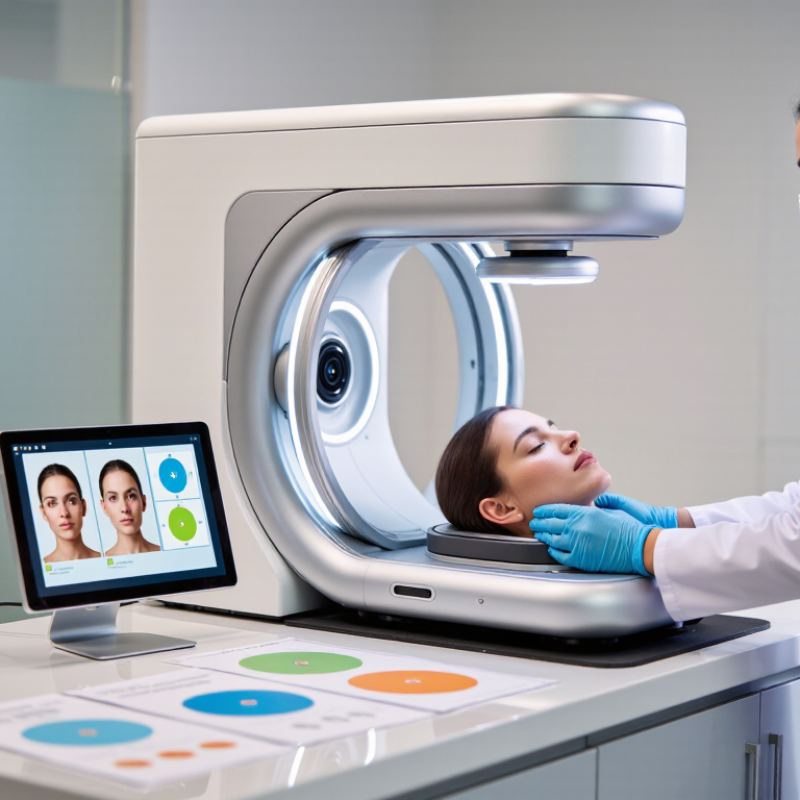
China’s Top Skin Analyzer Manufacturers: Market Scope and Buyer Criteria
China’s skin analyzer manufacturing market serves beauty clinics, dermatology practices, hospitals, laboratories, and professional distributors. Manufacturers commonly offer facial imaging systems, moisture readers, sebum measurement tools, and ultraviolet-based analysis. Some factories also provide OEM and ODM development for international buyers.
Market scope matters, but product evidence matters more. A reliable analyzer should produce repeatable images under controlled lighting. Ask about camera resolution, calibration methods, image storage, and software update policies. Request sample reports from different skin tones and lighting conditions. One attractive dashboard proves very little.
Buyer evaluation should include factory experience, quality management, technical support, and export documentation. Check whether the supplier offers operator training and clear maintenance procedures. Data protection also deserves attention, especially when facial images are stored online. Independent testing is valuable, although not every supplier provides complete validation records. That gap should make buyers cautious.
During practical evaluation, compare the same volunteer before and after cleansing. Keep distance, lighting, and room temperature unchanged. Small differences can expose unstable measurements. No device is flawless. Even experienced teams may overinterpret colorful charts. I would prefer transparent limitations over impressive claims, and a supplier that answers difficult questions directly. A factory visit, video audit, or third-party inspection can reveal assembly discipline, testing habits, and after-sales readiness.
Core Technologies: RGB, UV, Polarized Imaging, and 3D Depth Capture
China’s leading skin analysis machine manufacturers are distinguished by more than attractive screens. Their core advantage lies in controlled imaging and repeatable measurement. RGB imaging records visible redness, pigmentation, pores, and texture under balanced lighting. A useful system should keep brightness consistent between examinations. Otherwise, a brighter lamp may imitate healthier skin.
UV imaging reveals subsurface pigment patterns that ordinary photographs cannot show. It requires carefully controlled illumination and proper eye protection. Polarized imaging reduces surface reflection from oil and moisture. This helps practitioners inspect redness and uneven tone more clearly. In a clinic, the difference is practical: a cheek photographed before and after cleansing should remain comparable.
3D depth capture adds structure to the assessment. It can map wrinkle depth, facial contours, and volume changes from several angles. Strong manufacturers combine depth sensors with calibration checks, stable positioning, and software that stores measurable records. Dermatology experience matters here. Algorithms should support professional judgment, not replace it. A reliable supplier explains testing methods, image limitations, and data protection procedures.
The technology is not flawless. Makeup, dehydration, room temperature, and skin tone can influence results. I would question any manufacturer promising instant certainty. Independent clinical evaluation and repeated scans are more convincing than dramatic demonstrations. Small differences still need interpretation. That part remains surprisingly human.
Manufacturer Shortlist: OEM Capacity, ISO 13485, and NMPA Documentation
China Top Skin Analysis Machine Manufacturers?
A serious shortlist starts with evidence, not attractive product images. The World Health Organization reports more than two million medical devices across over 7,000 generic groups. Skin analysis systems can therefore involve cameras, lighting, software, and regulated measuring functions. Ask each manufacturer for its ISO 13485 certificate, certification scope, audit status, and manufacturing address. The certificate should cover the actual device category, not only unrelated production activities.
OEM capacity needs practical proof. Review prototype records, pilot-run data, calibration procedures, incoming inspection, and software change controls. Request sample device history records with serial-number traceability. Also inspect cybersecurity controls when images or patient information are stored. A factory may promise 10,000 units monthly, yet its testing room may support only a small batch. That gap matters.
NMPA readiness requires more than translated brochures. The manufacturer should map product classification, prepare Chinese technical requirements, maintain risk-management files, and provide electrical safety and electromagnetic compatibility reports where applicable. Clinical evaluation evidence must match the intended claims. NMPA’s Medical Device Administration Law and registration guidance place responsibility on documented safety, performance, and quality systems. Check whether the OEM can support local-agent communication and post-market records. I would also verify recent corrective actions through official regulatory databases. ISO 13485 helps, but it is not market approval. The shortlist should remain provisional until documents, samples, and factory evidence agree. That is where many evaluations become uncomfortable.
Performance Benchmarks: ≥8 Lighting Modes, Resolution, and AI Repeatability
China Top Skin Analysis Machine Manufacturers?
When comparing Chinese skin analysis machine manufacturers, inspect performance before marketing claims. A credible system should provide at least eight lighting modes, including polarized, ultraviolet, and cross-polarized views. Each mode should reveal a different surface or subsurface feature. Ask for recorded test images, not only showroom demonstrations. Practical evaluation should use the same subject, camera distance, and room lighting.
Resolution matters, but higher pixels do not guarantee better analysis. A useful baseline is a 12-megapixel camera with sharp facial detail across the forehead, cheeks, and nose. Check whether pores remain visible after image compression. The display should preserve small differences without artificial sharpening. Lighting must stay even, with no bright patches near the temples. Small errors can distort comparisons.
AI repeatability deserves stricter testing. Capture three scans within five minutes, then compare the reported scores and marked areas. A reliable platform should show limited variation under identical conditions, with an internal target below five percent for repeated measurements. This is a practical benchmark, not a universal regulation. Request validation data from real operating environments. My concern is that many systems perform well in controlled rooms but weaken under changing daylight. Operators also need simple calibration steps, clear patient positioning, and exportable records. Technology still needs human review.
China Skin Analysis Machine Performance Benchmarks
Reference benchmarks for professional skin analysis systems: at least 8 lighting modes, approximately 2.07 megapixels from 1920 × 1080 image capture, and AI assessment repeatability of 95% under consistent imaging conditions. These figures are category-level benchmarks and are not manufacturer-specific.
Purchasing Guide: Warranty, Calibration, Software Integration, and ROI
China Top Skin Analysis Machine Manufacturers?
Purchasing Guide: Warranty, Calibration, Software Integration, and ROI
A reliable skin analysis machine needs more than sharp images. Check warranty coverage, response time, and replacement-part availability. A 12–24-month warranty is common, but confirm whether calibration is included. ISO 17025 guidance supports traceable calibration through competent laboratories. Ask for calibration certificates, test images, and service records. Small details matter.
Software should export raw images, assessment scores, and customer consent records. It should also connect with clinic booking or CRM systems through documented APIs. HL7 and FHIR principles can improve data exchange, although many beauty systems still lack full compatibility. Grand View Research reported continued double-digit growth in the global aesthetic devices market through 2030. Growth does not guarantee return. Calculate ROI using monthly scans, average treatment revenue, maintenance cost, and staff time. McKinsey’s 2023 beauty report also highlights rising demand for personalized recommendations. Yet personalization fails when image quality changes between visits.
Tips: Request a live demonstration with different skin tones and lighting conditions. Test one complete customer journey. Confirm software updates remain available after the warranty ends. Ask who owns the collected data. A cheaper machine may create higher training costs. I have seen teams overestimate ROI because they counted consultations but ignored retakes and staff training. That is an uncomfortable gap. Keep a three-month pilot target, record conversion rates, and review the numbers honestly.