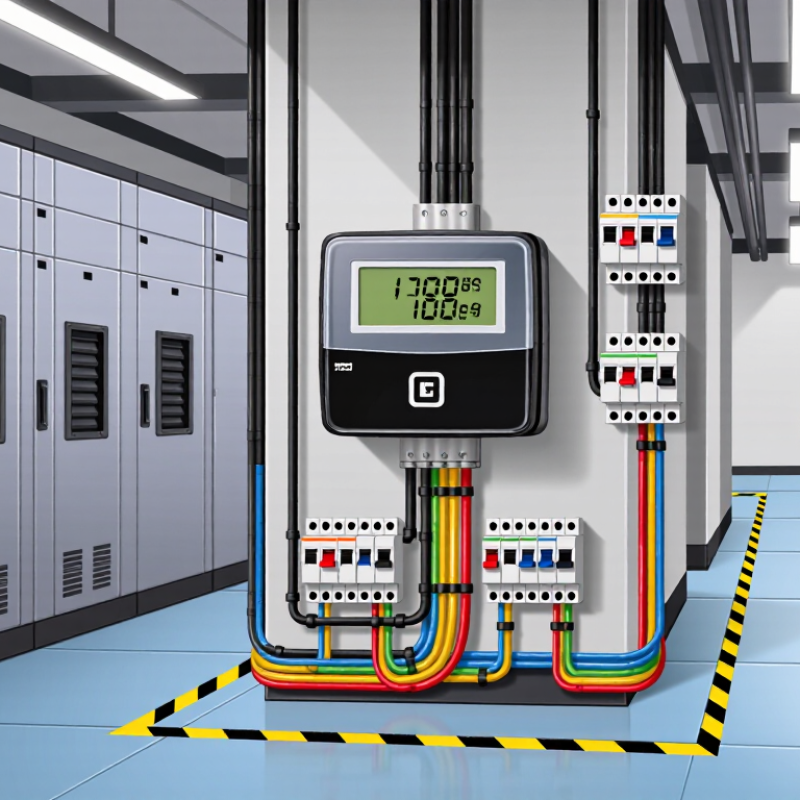
I once treated a “high accuracy” figure as proof of quality. That shortcut was wrong. Check the stated accuracy class under IEC 62053, then examine current range, power factor, temperature, and calibration conditions. A class 1 meter may suit general monitoring, while billing-grade work may require tighter performance. Compare communication stability, data storage, update intervals, and low-load readings. Test the meter against a trusted reference. Do not trust the screen alone.
Safety needs equal attention. Look for IEC 61010-1 compliance, suitable overvoltage category, isolation, and temperature limits. An IP rating matters in dusty or damp enclosures, but IP protection does not replace electrical safety. For installation, compare direct wiring, split-core current transformers, and DIN-rail mounting. Split-core units reduce disruption, yet incorrect orientation can reverse readings. Confirm conductor size, phase arrangement, neutral requirements, and clearance space. Wireless does not mean installation-free. A qualified electrician should verify the circuit. I would also leave room for mistakes, because real panels are rarely as tidy as product diagrams.