| Cotton Drill Workwear | 100% cotton, tightly woven drill or twill | 220–350 g/m² | General maintenance, workshops, construction, agriculture, and indoor production | Breathable, comfortable, low static generation, and suitable for warm working conditions | Absorbs moisture, dries slowly, may shrink, and offers limited abrasion resistance compared with synthetic blends | ISO 13688 for general protective clothing when designed and tested accordingly | Check pre-shrunk treatment, colorfastness, seam strength, wash-temperature limits, and regional sizing |
| Polyester-Cotton Twill | Common blends include 65% polyester / 35% cotton or similar ratios | 180–300 g/m² | Logistics, manufacturing, facilities management, retail operations, and daily uniform programs | Good balance of durability, color retention, wrinkle resistance, quick drying, and cost efficiency | Less breathable than cotton, can retain heat, and ordinary blends are not inherently flame resistant | ISO 13688 for general protective clothing when applicable | Confirm fiber ratio, pilling performance, colorfastness, dimensional stability, and industrial laundry compatibility |
| Flame-Resistant Workwear | Inherently flame-resistant fiber or certified treated cotton/blend with protective construction | 200–350 g/m² | Welding, metal processing, utilities, electrical-risk areas, and selected oil and gas tasks | Reduces after-flame and heat exposure risk when correctly specified and certified | Higher purchase cost, possible heat burden, and protection can decline if treated fabrics are incorrectly laundered | ISO 11612; ISO 11611 for welding-related protection; IEC 61482-2 for electric-arc thermal hazards where relevant | Match the garment to the documented hazard assessment; verify test reports, care instructions, closures, and accessory compatibility |
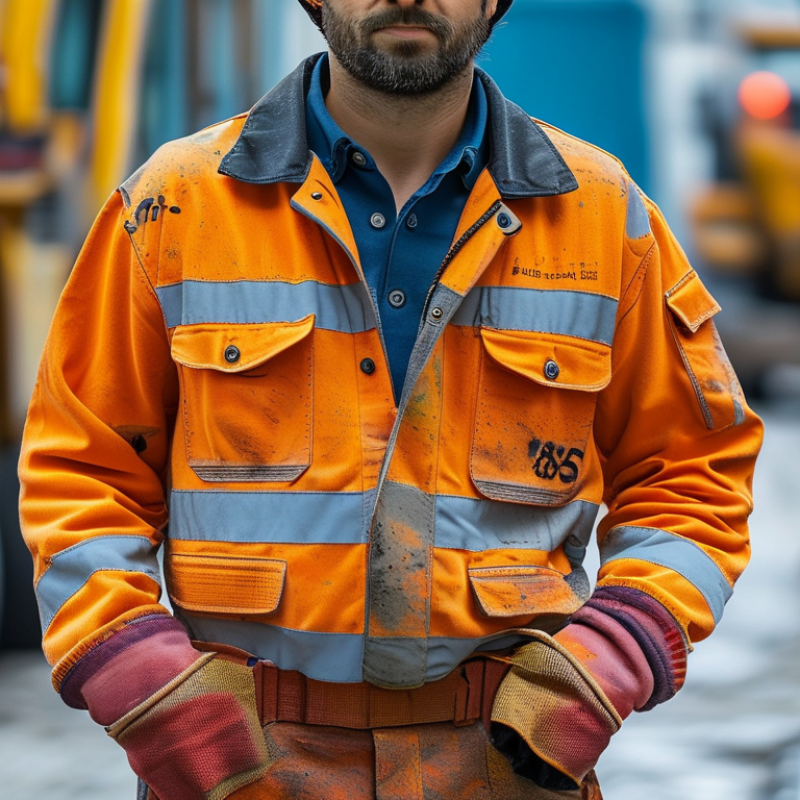
| High-Visibility Workwear | Fluorescent polyester or polyester blend with retroreflective bands | 120–250 g/m² | Road work, warehouses, airports, rail areas, construction sites, and low-light operations | Improves wearer conspicuity during daylight, nighttime, and low-visibility conditions | Fluorescent colors fade with washing and sunlight; performance depends on correct garment class and coverage | ISO 20471 or equivalent regional high-visibility requirements | Check high-visibility class, background and retroreflective material area, contrast, wash life, and local traffic regulations |
| Waterproof-Breathable Shell | Coated or laminated polyester/polyamide shell with sealed or protected seams | 120–250 g/m², excluding removable insulation | Outdoor construction, transport, utilities, forestry, and wet-weather service work | Protects against rain and wind while allowing some water-vapor transfer | Breathability varies by design; coatings can degrade through abrasion, contamination, or improper washing | EN 343 or equivalent rain-protection requirements; ISO 13688 may also apply | Review waterproofness, breathability, seam construction, hood adjustment, storm flaps, and temperature layering needs |
| Softshell or Stretch Layer | Stretch-woven polyester or polyamide with brushed fleece backing and optional membrane | 220–350 g/m² | Outdoor service, installation, surveying, warehousing, and active cold-weather work | Flexible, comfortable, wind resistant, and suitable for layered clothing systems | Usually not fully waterproof; fleece interiors may retain heat and attract lint or debris | ISO 13688 where classified as protective clothing; additional rain or visibility standards may apply | Check stretch recovery, abrasion resistance, wind protection, pocket placement, and compatibility with high-visibility layers |
| Chemical-Resistant Coverall | Chemical-resistant coated fabric or nonwoven coverall with hood, elasticated openings, and protected seams | 40–250 g/m², depending on reusable or limited-use construction | Chemical handling, agricultural spraying, cleaning operations, and controlled industrial maintenance | Can reduce exposure to specified liquid sprays, particles, or limited chemical splashes when correctly selected | Protection is chemical-specific; heat, movement, visibility, and disposal requirements must be assessed | ISO 13034 for limited protection against liquid chemicals; EN 14605 or other chemical-protection standards for higher levels | Request permeation and penetration data for the exact chemicals, concentration, temperature, and exposure duration |
| Antistatic Workwear | Conductive or dissipative fibers integrated into cotton or synthetic fabric structures | 180–300 g/m² | Explosive atmospheres, electronics assembly, clean production, and environments sensitive to electrostatic discharge | Helps control electrostatic charge when the complete clothing system and grounding conditions are suitable | Does not automatically provide chemical, flame, or electrical shock protection; performance may change with contamination and laundering | EN 1149-5 or equivalent antistatic clothing requirements | Confirm surface-resistance test data, footwear and grounding requirements, laundry method, and use-zone classification |