How to Choose the Best Lithium Batteries for Your Needs?
Choosing the right lithium batteries is crucial for various applications. With a projected market size of $70 billion by 2027, these batteries are more than just energy sources. They are vital for tech, automotive, and renewable energy sectors.
Many users don't fully understand their options. Lithium batteries come in various types, each with unique features. Selecting the wrong battery can lead to inefficiency. For instance, lithium iron phosphate offers safety, while lithium nickel manganese cobalt provides high energy density.
In a world driven by technology, informed choices matter. Consumers often overlook the specifications that impact performance and longevity. Research shows that improper selection can reduce battery life by 30% or more. It’s essential to weigh factors like voltage, capacity, and discharge rates carefully. Understanding these aspects can ensure you meet your specific energy needs.
Understanding Lithium Battery Types and Their Applications
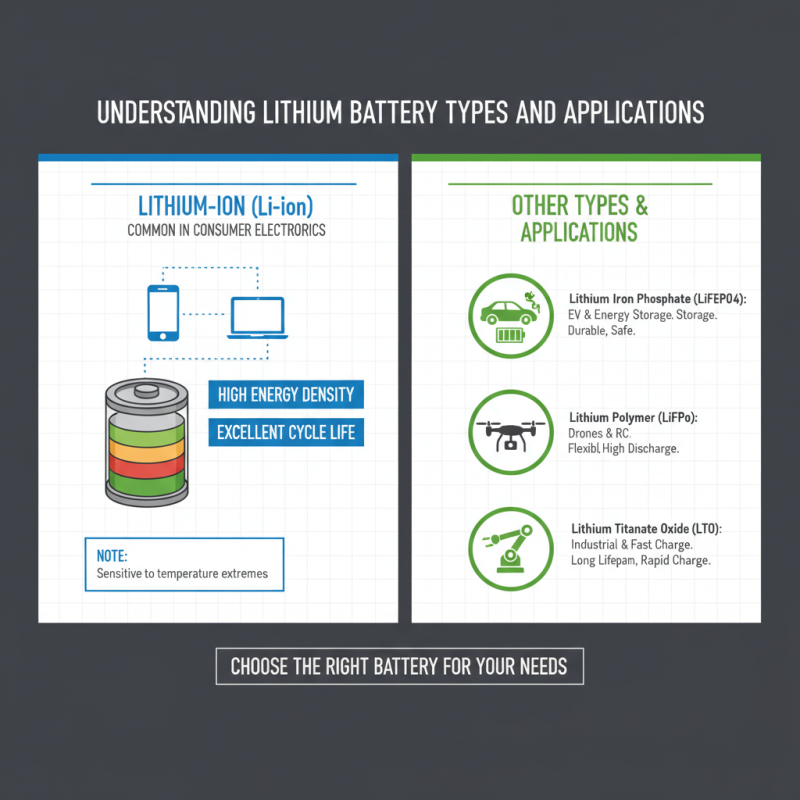
Lithium batteries come in various types, each suited for specific applications. Understanding these types is crucial for choosing the right battery. Lithium-ion (Li-ion) batteries are common in consumer electronics. They offer high energy density and excellent cycle life. You’ll find them in smartphones and laptops. However, they can be sensitive to temperature extremes, which could impact performance.
Another type is Lithium Iron Phosphate (LiFePO4). These batteries are safer and more stable than Li-ion. They are heavier but excel in electric vehicles and stationary storage due to their longevity. Users often weigh their options. The life span versus weight is a typical dilemma.
Lithium Polymer (LiPo) batteries are lightweight and flexible in form. This flexibility makes them popular in drones and remote-controlled devices. However, they require careful handling to avoid risks. Understanding your specific needs can lead to better decisions. Always consider the battery's application, required performance, and safety features before making a purchase.
Key Factors to Consider When Selecting Lithium Batteries
Choosing the right lithium battery involves understanding several key factors. One important aspect is the battery's capacity. It’s typically measured in amp-hours (Ah). A higher Ah rating means longer usage time. Think about your specific needs. For instance, a device that requires heavy usage will need a battery with a larger capacity.
Another critical factor is voltage. Lithium batteries usually come in various voltage ratings. Knowing the voltage required by your device ensures optimal performance. Also, consider the discharge rate. This rate impacts how quickly the battery can deliver power. For high-drain devices, a battery with a higher discharge rate is essential.
Don’t overlook safety features either. Robust batteries come with built-in protection against overcharging and short circuits. Reviews and expert insights help gauge reliability. However, remember that not every battery is perfect. Users often report issues like decreased lifespan. Reflect on the feedback. It can guide your selection, leading you to a battery that best fits your needs.
Comparison of Key Factors for Selecting Lithium Batteries
This chart compares essential factors to consider when selecting lithium batteries. The dimensions include Capacity (Ah), Cycle Life, Discharge Rate, Operating Temperature Range, and Cost. Understanding these factors can help you make an informed decision based on your needs.
Comparing Performance Metrics: Capacity, Voltage, and Lifespan
Choosing the right lithium battery for your needs involves understanding key performance metrics. Three primary metrics stand out:
capacity,
voltage, and
lifespan.
Capacity, measured in ampere-hours (Ah), indicates how much charge a battery can store. For instance, a battery with a capacity of 50 Ah can run a device drawing 10 A for five hours. This figure is crucial for anyone relying on sustained power.
Voltage is another critical factor. Generally, lithium batteries provide a voltage range between 3.2V and 4.2V per cell. A higher voltage can lead to more efficient power output for devices. For example, tools that operate at 18V will perform better with batteries closer to the high end of this range. However, this comes with trade-offs, such as increased stress on the battery, potentially shortening its lifespan.
Lifespan is often measured in cycles, representing how many times a battery can be fully charged and discharged.
Many lithium batteries boast 300 to 500 complete cycles, while some premium models claim up to 1,500 cycles. The actual lifespan can vary based on usage patterns and charging habits.
Users may find their batteries deplete faster under heavy usage, revealing a gap between advertised and real-world performance.
Recognizing these variables is essential for making an informed choice.
Evaluating Price and Warranty Options for Lithium Batteries
When selecting lithium batteries, evaluating price and warranty options is crucial. According to industry data, lithium batteries can range from $100 to $1,000 depending on quality and capacity. A more expensive battery may offer longer life and better performance. Customers should compare various offerings for value.
Warranties on lithium batteries can vary widely. Many manufacturers provide a warranty period of 2 to 10 years. A longer warranty often indicates greater confidence in product reliability. Reports show that battery failures often happen within the first few years of use, underscoring the importance of warranty coverage. Some vendors may offer a prorated warranty, which can impact long-term costs.
Consider the total cost of ownership when evaluating lithium batteries. The initial price may not reveal the full story. Research indicates that cheaper batteries often have higher long-term costs due to shorter lifespans. This makes understanding warranty details even more critical. It's essential to weigh the upfront cost against potential future expenses. Users must also track the battery's performance, as not all batteries live up to their claims.
How to Choose the Best Lithium Batteries for Your Needs?
| Battery Type |
Capacity (Ah) |
Price ($) |
Warranty (Years) |
Cycle Life |
| Lithium Iron Phosphate |
100 |
200 |
5 |
2000 |
| Lithium Cobalt Oxide |
50 |
150 |
2 |
500 |
| Lithium Manganese Oxide |
75 |
180 |
4 |
1000 |
| Lithium Nickel Manganese Cobalt |
90 |
220 |
3 |
1500 |
| Lithium Polymer |
40 |
130 |
1 |
300 |
Safety Considerations and Best Practices for Lithium Battery Use
When using lithium batteries, safety is paramount. A report by the National Fire Protection Association (NFPA) highlights that lithium-ion batteries can be involved in fires when they are damaged or improperly charged. Always inspect batteries for physical damage. A dent or crack may lead to thermal runaway, which can cause fire or explosion.
Charging practices play a crucial role. Use a compatible charger and avoid overcharging patterns. The Battery University states that charges should ideally be between 20% and 80% to ensure longevity and safety. Keep in mind that extreme temperature conditions can compromise battery performance. Storing batteries in high heat can lead to swelling and leakage, while extreme cold can reduce capacity.
Discarding lithium batteries requires careful consideration. Improper disposal can lead to environmental hazards. The Environmental Protection Agency (EPA) advises the recycling of lithium batteries to prevent toxic materials from entering landfills. Keeping informed about local regulations can guide you in responsible disposal. Proper practices limit risks and ensure the safety of both users and the environment.