How to Choose a Li Ion Car Battery for Global Sourcing?
Choosing a li ion car battery for global sourcing requires more than comparing voltage and price. Vehicle type matters. A 12-volt starter battery serves a different purpose than a 48-volt mild-hybrid pack or a high-voltage traction system. Buyers should define capacity, peak current, operating temperature, charging limits, dimensions, connector design, and expected service life before contacting suppliers. Small details can cause expensive delays.
A reliable sourcing process examines the cell manufacturer, battery management system, thermal controls, enclosure strength, and production traceability. Request current datasheets, test reports, sample records, and warranty terms. Check whether the supplier has experience with your vehicle platform and destination markets. Independent audits can verify factory conditions, quality controls, and batch consistency. Look for evidence of transport testing, including UN 38.3 compliance, alongside relevant regional and automotive standards. Requirements may differ across Europe, North America, and Asia. Confirm them with qualified local experts.
Performance numbers need careful interpretation. A high capacity figure does not guarantee strong cold-start performance or stable operation. Ask for test conditions, not only headline results. Inspect a sample battery physically. Check its seals, labels, cables, and diagnostic communication. Then test it under realistic load cycles. A supplier may provide excellent samples but inconsistent production batches. That possibility deserves attention. It is not pessimism. It is responsible purchasing. The right li ion car battery balances safety, verified performance, logistics, after-sales support, and total ownership cost. A cheaper quote can become costly when recalls, damaged shipments, or unavailable replacement modules appear. Reliable documentation creates confidence before the first container leaves the factory.
Define the Performance Requirements for a Li Ion Car Battery
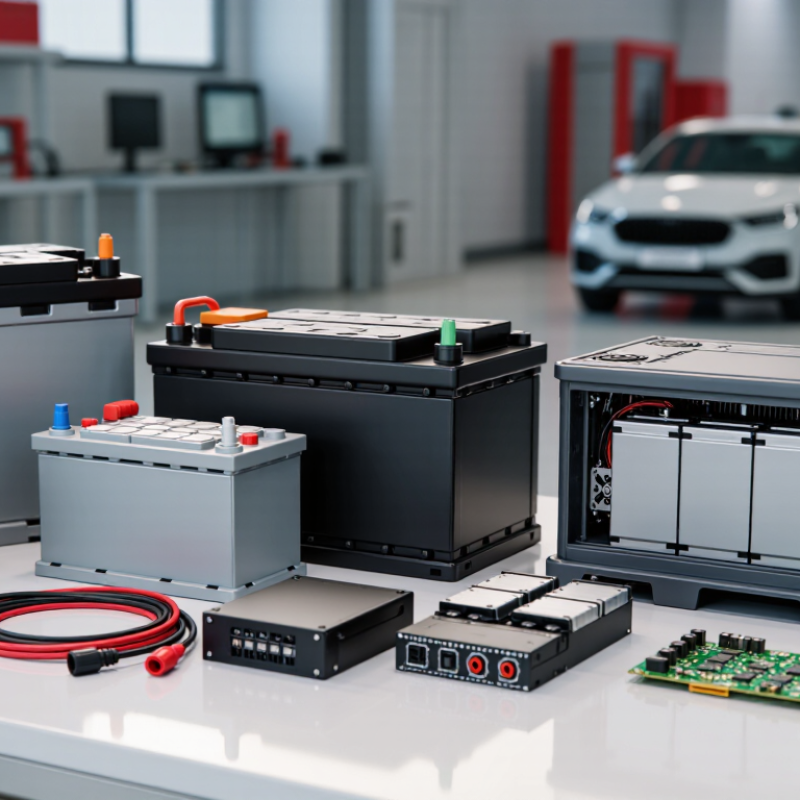
Before sourcing a Li Ion car battery, define the vehicle’s operating demands in measurable terms. Record the system voltage, usable capacity, continuous current, and peak starting current. Peak current matters. A battery may meet its capacity target yet fail during cold starts or steep climbs. Measure the space. Confirm the case length, width, height, terminal position, mounting points, and cable access.
Set temperature limits for both charging and driving. Include the lowest winter temperature and the highest under-hood temperature. Specify cycle life at a stated depth of discharge, not as a vague mileage promise. The battery management system should monitor voltage, temperature, current, balancing, and fault conditions. Ask for test methods, sample results, traceable production records, and clear warranty conditions. Independent safety and transport documentation also deserve review.
In practical sourcing work, we compare laboratory figures with real duty cycles. A delivery vehicle may stop fifty times daily, while a private car may sit unused for weeks. These patterns change the required capacity and charging strategy. Our first estimate was too optimistic because it ignored accessory loads during idling. That mistake was useful. Build a margin for lights, heating, cooling, battery aging, and measurement error. Avoid choosing the largest battery automatically; extra weight can reduce efficiency and alter vehicle handling. Require supplier samples before volume orders, then verify performance after repeated hot and cold cycles. Total cost should include testing, packaging, replacement planning, and field support.
Compare Battery Chemistry, Capacity, Voltage, and Power Ratings
How to Choose a Li Ion Car Battery for Global Sourcing?
Compare Battery Chemistry, Capacity, Voltage, and Power Ratings
Battery chemistry shapes safety, lifespan, weight, and cost.
Lithium iron phosphate cells usually offer strong thermal stability and long cycle life. Nickel-based cells can provide higher energy density when vehicle space is limited. However, chemistry alone does not prove quality. Ask for cell test data, thermal management details, and battery management system specifications. A poorly controlled pack can underperform, regardless of its chemistry.
Capacity should be reviewed in both ampere-hours and kilowatt-hours.
Kilowatt-hours show stored energy more clearly across different voltage systems. Check usable capacity, not only the advertised nominal figure. Temperature, charging limits, and reserve settings reduce available energy. Small details matter. A cold-weather test may reveal less range than a laboratory sheet suggests. I would request results at several temperatures before comparing suppliers.
Voltage must match the vehicle’s electrical architecture and operating range.
Nominal voltage is not the full story. Confirm maximum charging voltage, minimum discharge voltage, insulation requirements, and connector compatibility. Power ratings describe how quickly the battery can deliver or accept energy. Continuous power supports normal driving, while peak power affects acceleration and short bursts. A high peak figure may look impressive but hide weak sustained performance. Check discharge curves, cooling performance, and cycle-test conditions. Supplier traceability and independent verification also deserve attention, especially when sourcing across different markets.
Evaluate Safety Features, Certification, and Battery Management Systems
When choosing a lithium-ion car battery for global sourcing, safety evidence should guide every decision. Inspect the enclosure, terminals, insulation, and venting path. A reliable pack should manage overcurrent, short circuits, overheating, and abnormal charging. Thermal propagation protection matters because one damaged cell can affect nearby cells. Ask for test reports, production records, and clear batch traceability. Do not accept a generic safety statement.
Certification must match the destination market and vehicle application. Check whether testing covers vibration, impact, water exposure, electrical abuse, and transport requirements. Certification alone is not proof of consistent quality. Factory audits, sample testing, and independent laboratory results provide stronger evidence. I have seen technically impressive samples fail during repeated cycling. That uncomfortable detail deserves attention.
Tips: Review the battery management system before comparing prices. Confirm cell voltage monitoring, temperature sensors, balancing control, state-of-charge accuracy, and communication stability. Ask how the system reacts to sensor failure or lost communication. It should enter a safe state, not simply continue operating. Request raw test data when possible. Compare readings from several production batches. Keep records.
A good BMS also supports controlled charging and protects against deep discharge. Firmware updates need access control and documented testing. This is often overlooked. Use a sourcing checklist, but allow room for technical judgment. The cheapest compliant battery may still create costly integration problems.
Assess Supplier Capability, Quality Control, and Global Compliance
How to Choose a Li Ion Car Battery for Global Sourcing?
A capable supplier should explain more than cell capacity and quoted price. Ask for evidence of production experience, engineering resources, and stable output. Can the factory build complete packs, integrate battery management systems, and support different vehicle platforms? Request recent capacity data, equipment lists, and anonymized delivery records. A site visit helps, but a polished factory can still hide weak process control.
Quality control must be visible at every stage. Check incoming cell inspection, formation records, welding strength, insulation resistance, and end-of-line testing. Each pack should have traceable cells, operators, test results, and software versions. Ask how the supplier handles rejected materials and field failures. Independent testing can verify capacity, cycle life, vibration resistance, thermal safety, and short-circuit protection. Do not rely only on a supplier’s internal report.
Compliance varies by destination market. Confirm transport testing under UN 38.3, safety documentation, correct labeling, and applicable automotive standards. Depending on the vehicle and region, requirements may include ISO 9001, IATF 16949, ISO 26262 processes, or battery recycling obligations. Request a compliance matrix tied to the exact pack configuration. Small changes matter. A new cell, enclosure, or firmware version may require fresh evaluation. I once treated certification as a permanent approval; that assumption was too simple. Build contracts around change notification, audit rights, corrective actions, and retained samples. Suppliers should welcome difficult questions. That response is useful evidence.
How to Choose a Li-Ion Car Battery for Global Sourcing?
UN 38.3 transport-compliance test sequence for evaluating supplier documentation and logistics readiness
A qualified supplier should provide traceable test reports covering all eight UN 38.3 test categories before lithium-ion batteries are shipped internationally. The sequence includes altitude simulation, thermal test, vibration, shock, external short circuit, impact or crush, overcharge, and forced discharge. These transport-safety checks should be reviewed together with factory quality controls, cell traceability, change-management procedures, and destination-market compliance requirements.
Reference: United Nations Manual of Tests and Criteria, Part III, Sub-section 38.3.
Calculate Total Sourcing Costs, Logistics, Warranty, and After-Sales Support
Choosing a Li Ion car battery for global sourcing requires more than comparing unit prices. I once selected a lower-priced battery and overlooked reinforced packaging. Freight damage and replacement handling erased the saving. Build a cost sheet before ordering. Include cells, battery management systems, chargers, packaging, inspection, insurance, freight, duties, storage, and local delivery. A battery costing 180 dollars may reach 245 dollars after these charges.
Logistics details matter. Confirm the packed dimensions, gross weight, shipping route, temperature limits, and required transport documents. Ask for test reports, production records, and batch traceability. A supplier with clear technical files is easier to audit and more reliable during customs checks. Still, documents can become outdated. Verify them against the actual production batch.
Warranty terms should match real driving conditions. Check coverage length, cycle limits, capacity retention, and exclusions for deep discharge or incorrect installation. Define who pays for inspection and return shipping. After-sales support should include fault codes, remote troubleshooting, replacement procedures, and accessible spare units. Set a response target, such as two business days. Keep a warranty reserve in your budget. My early forecast used a three percent defect rate, but field data reached five percent. That mistake changed the final sourcing decision. Contentious claims should be reviewed by an independent technician. You need evidence, not promises.